
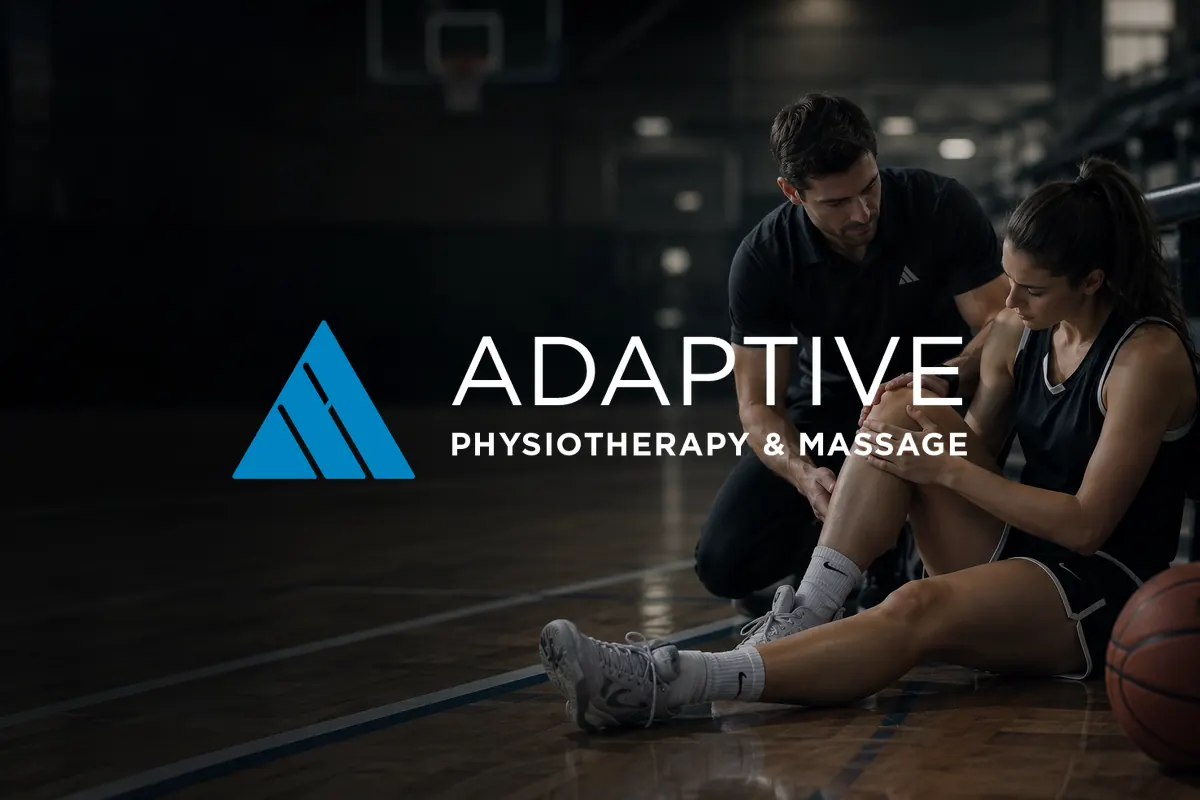
Twisted your knee during sport and felt a pop? Wondering whether you've torn your ACL?
Maybe it happened when you landed from a jump, changed direction to chase the ball or took a tackle with your foot planted. Your knee may have swollen quickly, and now walking, turning or putting weight through it feels uncertain.
One possible cause is an anterior cruciate ligament (ACL) sprain or tear. These injuries range from a mild sprain to a complete rupture, and they don't all need the same treatment. Understanding the injury is the first step towards a sensible rehabilitation plan.
At Adaptive Physiotherapy & Massage in Booragoon, we look at your knee, your goals and the activities you want to return to before deciding how to progress. You can learn more about our knee physiotherapy service.
What is an anterior cruciate ligament (ACL) sprain or tear?
The ACL is one of the main ligaments inside the knee. It helps control forward movement of the shinbone relative to the thighbone and contributes to rotational stability when you turn, land or change direction.
An ACL sprain occurs when the ligament is overstretched or torn. Football, netball, soccer, basketball and skiing are common settings, but ACL injuries can also occur during falls and other accidents. The injury may involve the meniscus, cartilage or other ligaments as well as the ACL.
Common symptoms
- A popping sensation or sudden pain at the time of injury.
- Swelling, sometimes developing rapidly after the incident.
- Difficulty bearing weight, straightening or bending the knee.
- A feeling that the knee may give way, especially during turning or pivoting.
- Reduced confidence with everyday movement, training or sport.
These signs can also occur with other knee injuries, so the symptoms alone do not confirm an ACL tear.
ACL injury grades
Grade 1 — mild sprain
The ligament is strained but remains largely intact, with relatively preserved stability.
Grade 2 — partial tear
Some fibres are torn. Symptoms and joint stability vary, and assessment is important.
Grade 3 — complete tear
The ligament is fully ruptured. The need for surgery depends on instability, associated injuries and individual goals—not the grade alone.
Associated knee injuries
Meniscus, cartilage or other ligament damage can change treatment recommendations and rehabilitation restrictions.
Assessment: finding out what your knee needs
A physiotherapy assessment considers how the injury happened, swelling, movement, strength, weight-bearing tolerance and any feeling of instability. Clinical ligament tests may help indicate ACL involvement. Medical imaging or orthopaedic review may be appropriate to clarify the injury and assess other structures.
Evidence-informed management of an ACL sprain or tear
ACL management depends on injury severity, associated damage and what matters to the person. Early care generally aims to manage swelling and pain, regain movement and establish an appropriate plan. Some people proceed to reconstruction; others follow a structured non-operative program. Both approaches involve rehabilitation.
Initial management and pain relief
In the early stage, relative rest from aggravating activities, compression, elevation and appropriate symptom relief may help. The aim is not complete inactivity: suitable walking, range-of-motion work and muscle activation can often begin as tolerated, following medical advice where indicated.
Bracing, crutches and weight-bearing restrictions may be required for some injuries, particularly if other structures are affected. Your treatment plan should reflect the actual injury rather than a generic protocol.
Manual therapy and movement
Gentle joint mobilisation or hands-on techniques may help some people manage stiffness or discomfort around the knee, hip or ankle. The original article discussed joint mobilisation, soft-tissue techniques and stretching; these remain possible options when appropriate.
However, manual therapy does not repair a torn ACL and should not replace progressively rebuilding strength and function. Careful remedial massage may also be useful for associated muscular discomfort when clinically appropriate, but it is not the primary treatment for ligament damage.
Exercise rehabilitation for ACL injuries
Exercise is central to recovering knee function whether someone has surgery or follows non-operative management. At Adaptive, exercises are selected and progressed according to symptoms, knee stability, strength, clinical advice and the demands of work or sport.
Range of motion and early muscle activation
Early exercises may include heel slides, quadriceps contractions, gentle knee bends and supported weight-bearing as appropriate. The priorities are to regain comfortable knee extension, improve bending and re-establish muscle control without provoking excessive swelling.
Progressive strengthening
As the knee tolerates more load, strengthening can include leg press variations, glute bridges, step-ups, hamstring exercises and progressively heavier quadriceps, hip and calf work. The choice and timing depend on whether the ACL is being managed conservatively or surgically and whether there are other injuries or restrictions.
Our sports rehabilitation program can support the transition towards higher physical demands where appropriate.
Balance and movement control
Single-leg standing, controlled stepping, balance tasks and more demanding coordination work can help prepare the knee for changing positions and responding to movement. Balance boards and agility exercises may be included as part of a wider strength and function plan—not as stand-alone tests of ligament healing.
Functional and sport-specific training
Depending on your goals, later rehabilitation may include running progressions, jumping and landing, deceleration, change of direction and sport-specific skills. Return to training and return to competition are separate milestones.
Progression should be based on a broad assessment of strength, knee function, symptoms, training tolerance and confidence—not simply the number of weeks or months since injury. See our guide to returning to sport after an ACL injury.
Surgical or non-surgical treatment?
A complete ACL tear does not automatically mean reconstruction is required. Some people regain good day-to-day and sporting function with rehabilitation-first care. Others benefit from surgery because of recurrent giving-way episodes, associated injuries or particular activity demands.
Rehabilitation-first management
A structured program to rebuild range, strength, control and activity tolerance without immediate reconstruction. Some people continue without surgery, while others consider surgery later if instability remains a problem.
ACL reconstruction
Surgical reconstruction may be considered after clinical and orthopaedic assessment. It is followed by substantial rehabilitation and does not automatically guarantee a return to the previous level of sport.
For a more detailed discussion, read operative versus non-operative ACL management. If surgery is planned, our article on ACL prehabilitation before surgery explains what may be useful beforehand.
Long-term knee strength and reducing future injury risk
Rehabilitation should not end as soon as walking feels normal. Ongoing quadriceps and hamstring strength, whole-leg capacity, appropriate warm-ups and gradually increasing training demands can help prepare the knee for activity. No program removes all risk of another injury.
Our related guide, Your ACL Recovery Journey, looks at the wider rehabilitation pathway. For anyone returning to football, netball or other pivoting sports, readiness testing and progressive exposure matter.
What should you do next?
If you've recently hurt your knee, an assessment can help clarify whether the ACL or other structures may be involved and what needs to happen next. If you're already recovering, physiotherapy can help review your movement, strength and progress towards work, exercise or sport.
Related reading
Book an ACL or knee injury assessment
If you've injured your knee or need guidance with ACL rehabilitation, we can assess your movement, strength and goals and help you plan the next step. We're based at 27 Shields Crescent, Booragoon WA 6154.
Adaptive Physiotherapy & Massage · Booragoon
References
- Kotsifaki R, et al. Aspetar clinical practice guideline on rehabilitation after anterior cruciate ligament reconstruction. British Journal of Sports Medicine. 2023;57:500–514. Read guideline.
- Aspetar Orthopaedic and Sports Medicine Hospital. Recommendations on Rehabilitation after ACL Reconstruction. Clinical recommendations.
References are provided for general education. Rehabilitation plans and decisions about surgery must be individualised with the treating healthcare team.