
Hip Physiotherapy in Booragoon
That ache on the outside of your hip when you lie on your side. A pinch in the groin when you squat or get into the car. Stiffness that makes walking or putting on shoes harder than it should be.
Maybe the problem has been there for months despite rest, stretches or previous treatment—or perhaps it started recently and you want a clear plan from the outset.
At Adaptive Physiotherapy & Massage in Booragoon, we assess your hip, understand what matters to you and help you move forward with individualised treatment and rehabilitation.
- Individualised assessment
- Progressive rehabilitation
- Free onsite parking
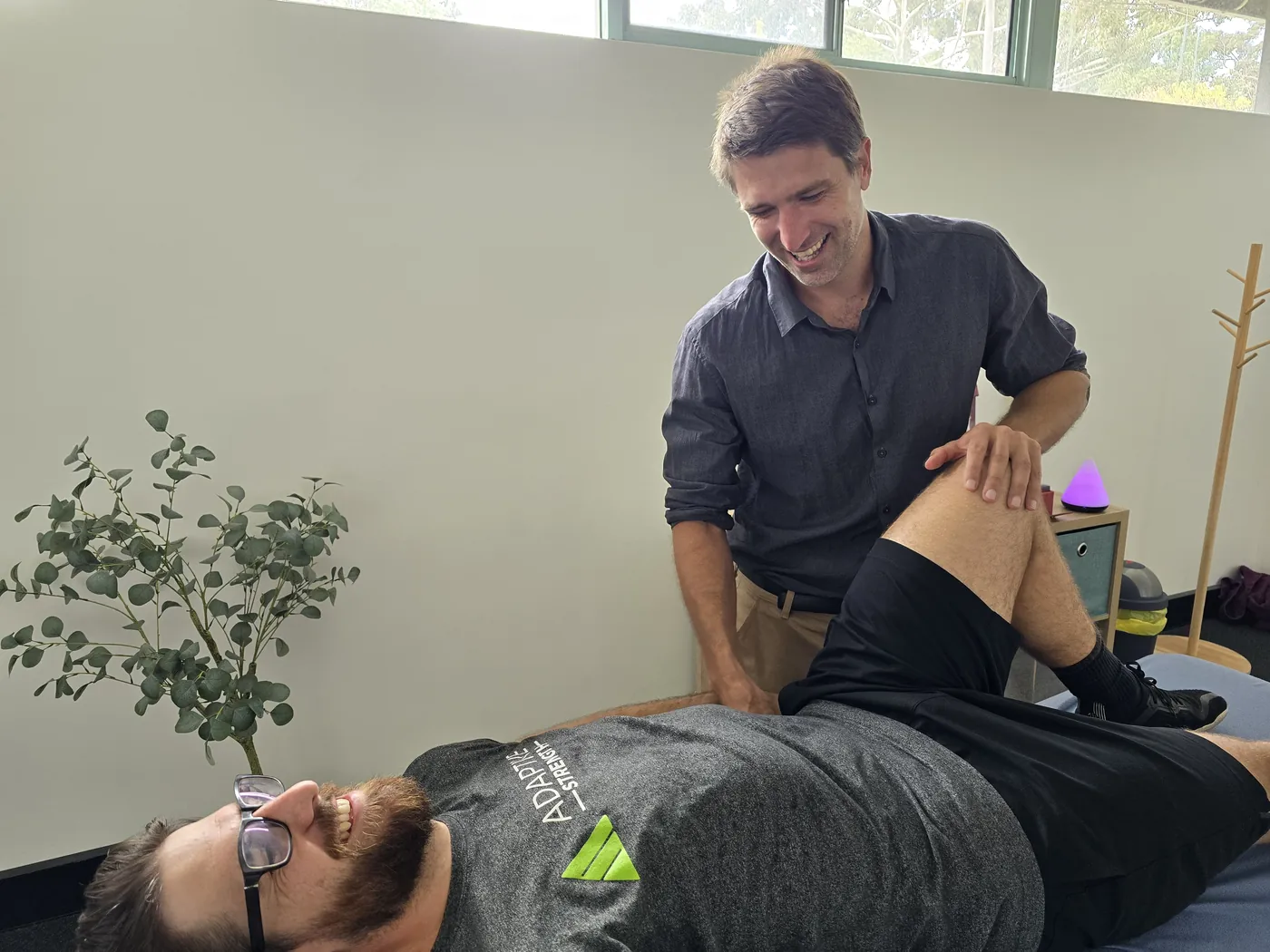
It’s not just your hip. It’s what pain stops you doing.
Hip problems can gradually change the way you move—or make normal activities suddenly uncomfortable. Whether it is new, recurring or has been there for months, we start with the activities you want to get back to.
Walking & stairs
Long walks, the stairs at home or getting through a workday on your feet are becoming harder.
Sleeping & side-lying
An ache on the outside of your hip makes lying on one side uncomfortable or interrupts sleep.
Bending & getting dressed
Putting on shoes or socks, sitting for a while, getting into the car or standing from a chair brings stiffness or a sharp pinch.
Training & recurring pain
Squats, running, cycling or sport bring the symptoms back—even after you have rested or tried to work around them.
Hip Injuries & Conditions We Assess
Hip pain can be felt in the groin, outer hip, buttock or thigh. Different conditions can feel similar, so we assess your symptoms, movement and goals before discussing what care may help.
Explore common presentations below, with helpful articles from Adaptive for anyone wanting to read further.
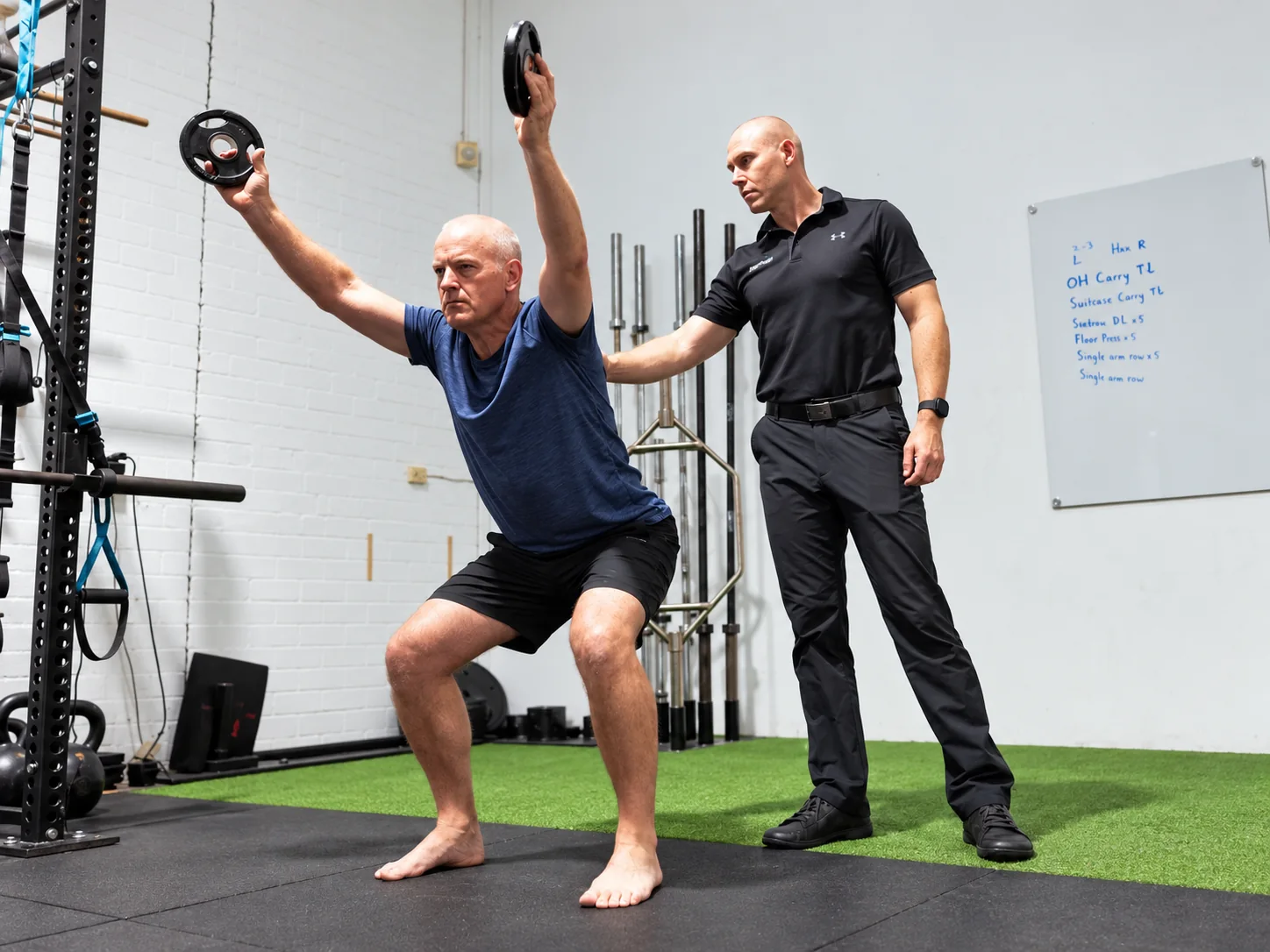
Not sure what is causing your hip pain?
You do not need to arrive with an exact diagnosis. Tell us where it hurts, what makes it worse, what you have tried and what you would like to do again. We will assess your hip and consider whether your back or other structures may also be contributing.
Aching on the outside of the hip can be particularly noticeable with side-lying, walking or stairs. Gluteal tendon problems and greater trochanteric pain syndrome are common possibilities; symptoms are not always caused by an inflamed bursa alone.
Assessment helps us decide on useful activity adjustments, education and a progressive strengthening approach, where appropriate.
Groin discomfort, pinching with deep hip bending, or pain during squats and prolonged sitting can be associated with several hip conditions, including femoroacetabular impingement (FAI) syndrome and labral injuries. A scan finding on its own does not always explain pain.
We consider your symptoms, hip movement, strength and activity demands, and discuss options including physiotherapy, activity modification and medical review where appropriate.
Read about hip impingement (FAI), labral tears and physiotherapy →
Hip osteoarthritis can contribute to groin or thigh pain, morning stiffness and difficulty with walking, sitting or getting dressed. Exercise-based care can be an important part of managing symptoms and maintaining function.
We work with your current abilities and goals, using movement guidance and progressive strength work as appropriate.
Pain at the front of the hip or in the groin can follow a sprint, kick, sudden change of direction or a change in training load. We assess how the area responds to movement and loading, then discuss a plan for returning to the activities that matter to you.
Rehabilitation may include graded exercise and strengthening alongside advice on suitable activity.
Some pain felt around the hip or buttock may involve the lower back, sacroiliac region or other nearby structures. It is worth understanding the pattern of symptoms rather than assuming every ache is caused by the hip joint.
Our assessment considers your history, movement, functional limitations and whether further medical review is appropriate.
After total hip replacement, arthroscopy or another hip procedure, rehabilitation should match the surgery, your surgeon’s instructions and the stage of healing. We help you work towards practical goals such as walking, stairs, daily activity and, when suitable, returning to exercise.
Your physiotherapist can guide and review rehabilitation, including progressive exercise when appropriate.
Having hip pain does not automatically mean one particular diagnosis or treatment. We will assess your concerns, explain what we find and help you choose suitable next steps.
Ease the frustration. Rebuild what your hip needs to do.
Hip pain that has lasted months can wear you down—particularly when rest, stretching or earlier treatment has not led to the progress you wanted. A recent hip injury can bring its own uncertainty about what to do next.
We start with a proper assessment and a clear discussion of what may help. Depending on your situation, care can include hands-on treatment, education, changes to activity and progressively challenging movement or strength rehabilitation.
The aim is not just to provide a temporary appointment-to-appointment fix. It is to help you move towards the walking, work, exercise or sport that matters to you.
Understand your hip and your goals
We listen to your history, what you have already tried and what you want to regain. We assess relevant hip movement and function.
Start with the care that fits you
Your plan may include advice, activity adjustments, hands-on care, exercise and load management, depending on what is appropriate.
Build movement, strength and capacity
We progress and reassess as you change, helping you build tolerance for everyday life, walking, work, gym or sport.
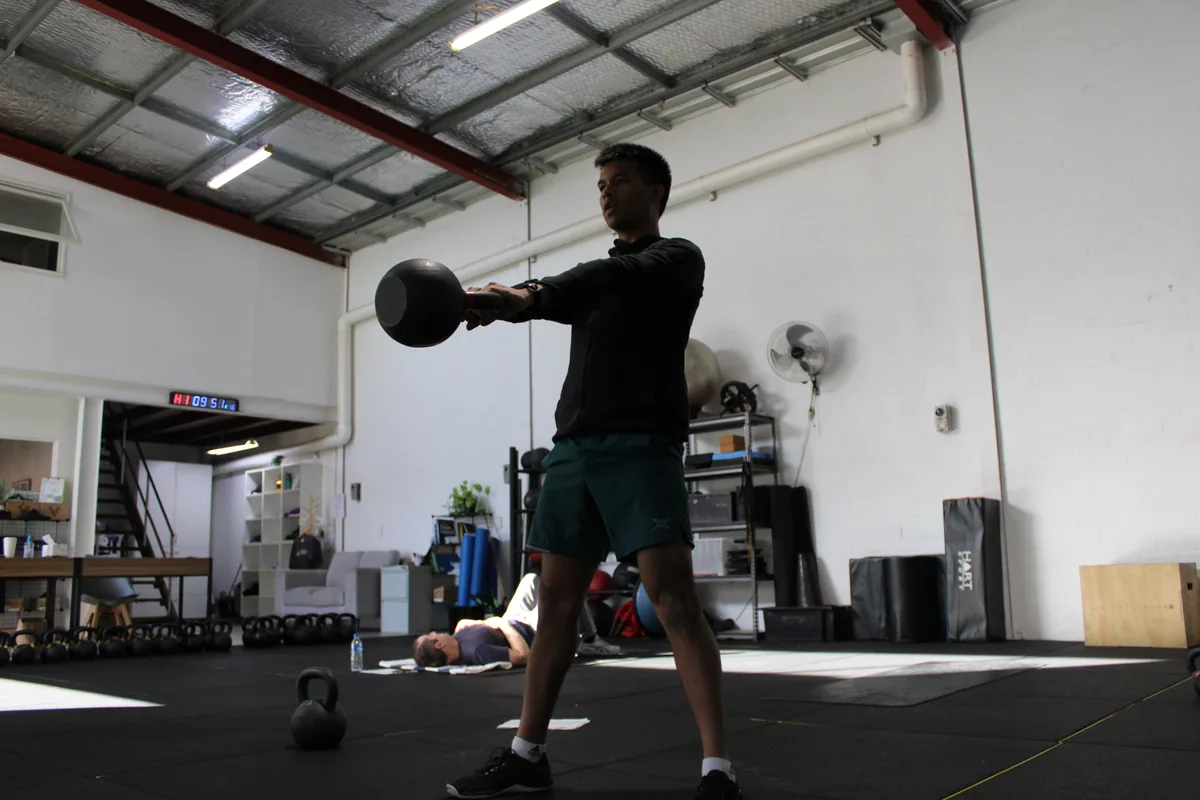
Movement • Strength • Recovery
Individualised hip rehabilitation, guided by your needs, your goals and your progress.
Build Hip Strength Beyond Your Physio Appointments
When hip pain has limited walking, training or everyday activity, feeling better is only part of the picture. You may also want to rebuild the strength and confidence to do more again.
At Adaptive, your physiotherapist can develop an individual rehabilitation programme and guide your progress. When extra supervision would help, Physio-Guided Exercise & Strength Training offers a professionally supervised environment for progressive exercise.
Not everyone needs supervised sessions. We will discuss what suits your hip, goals and preferences, including an independent exercise programme when appropriate.
PHYSIO-GUIDED EXERCISE & STRENGTH
Physio-guided. Coach-supported.
An option for people who would benefit from structured, supervised exercise beyond the consultation room.
A plan built around your hip
Your physio identifies priorities based on symptoms, goals and current capacity.
Supervised, progressive training
Coaches help you practise exercises and build strength in a supported training environment.
Review and adapt
Your physiotherapist can reassess progress and update the plan as needed.
Different needs. Connected support when it helps.
Hip pain can overlap with back, knee and sports-related concerns. Our Booragoon clinic offers different care options—but your physiotherapy assessment is the starting point for deciding what is relevant to you.
Sports Physiotherapy
For hip and groin injuries, running-related problems and a planned return to activity or sport.
Knee Physiotherapy
When hip concerns overlap with knee pain, walking tolerance or rehabilitation goals, explore knee-specific care.
Remedial Massage
Individualised hands-on care for muscle tension and recovery, with its own assessment and booking pathway.
Start with a hip physiotherapy assessment.
Tell us what is happening, what has been frustrating you and what you would like to do again. We will assess relevant hip movement and function, discuss our findings and help you decide on an individual plan. Have a question before booking? Talk to a physio first.
Adaptive Physiotherapy & Massage · 27 Shields Crescent, Booragoon WA 6154 · Free onsite parking · (08) 9468 3555
Hip Physiotherapy FAQs
You generally do not need a GP referral for private physiotherapy. Some compensable, DVA or other funded care arrangements have specific requirements.
We discuss your symptoms, previous care, medical and injury history, daily activities and goals. Your physiotherapist assesses relevant movement and function, explains the findings and discusses suitable next steps.
Lateral hip pain can be related to several conditions, including gluteal tendon problems and greater trochanteric pain syndrome. An assessment can help clarify what is contributing and guide practical management.
Exercise, education and activity guidance are commonly recommended parts of managing hip osteoarthritis. We adapt movement and strengthening to your current ability and goals; physiotherapy does not reverse arthritis.
We review what you have already tried, what triggers symptoms and what you want to achieve. A new assessment may identify different priorities or a more structured rehabilitation approach. We will also discuss when medical review is appropriate.
We can assess relevant hip symptoms, movement and strength and discuss management options. The significance of imaging findings depends on the person and their symptoms; some cases warrant collaboration with a GP or specialist.
Either or both may be appropriate. Physiotherapy can include education, hands-on care, movement guidance, load management and progressively challenging exercises according to your preferences and assessment.
We can help guide rehabilitation appropriate to your procedure, stage of healing and surgeon’s instructions. Bring any relevant post-operative advice, restrictions or rehabilitation protocol.
No. It is an option if supervised, progressive exercise would be helpful. Many people can continue with independent exercise, advice or shorter-term physiotherapy care.
We discuss your current capacity and goals, then use relevant activity advice and progressive exercise where appropriate. Return-to-activity decisions depend on your symptoms, recovery and the demands of your chosen activity.
Not necessarily. Many hip concerns can be assessed clinically first. We can discuss if imaging or medical review may be useful based on your history and examination.
Seek urgent medical care after major injury or a fall if you cannot bear weight, or for sudden severe hip pain with fever, marked swelling or feeling significantly unwell. New major neurological symptoms also require prompt medical assessment.
Many private health policies include physiotherapy benefits, depending on your cover. Adaptive offers HICAPS claiming where your fund and policy are eligible.
Get Back to Walking, Moving & Doing More
Whether hip pain began recently or has been getting in the way for months, you do not have to keep guessing what to try next. Start with a physiotherapy assessment in Booragoon and a plan built around you.
Adaptive Physiotherapy & Massage · 27 Shields Crescent, Booragoon WA 6154 · Free onsite parking