
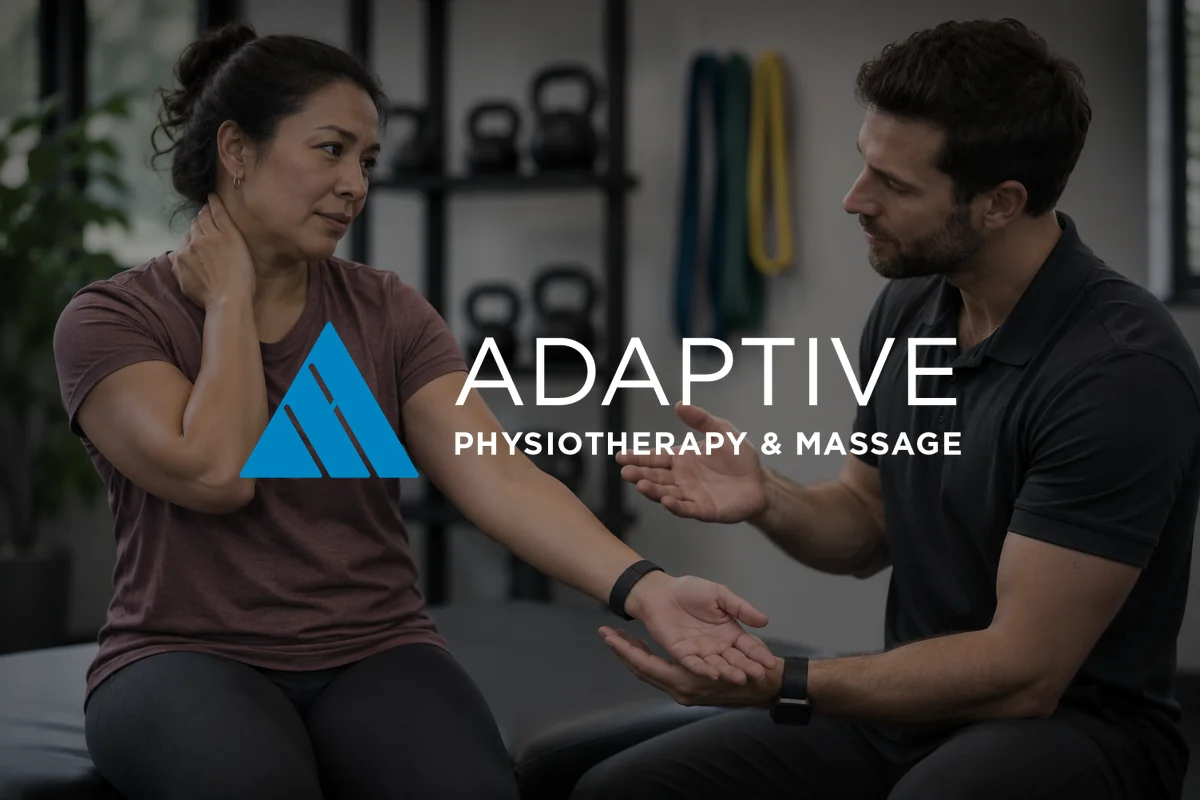
Neck & arm symptoms / Patient guide
Arm pain, tingling or numbness can sometimes begin in your neck.
If symptoms travel from your neck or shoulder into your arm or hand, it can be difficult to know where they are coming from. Understanding the pattern is the first step towards an appropriate treatment plan.
01 / Understanding the symptoms
What is cervical radiculopathy?
Cervical radiculopathy describes symptoms caused by irritation or pressure affecting a nerve root as it leaves the cervical spine — the part of your spine in your neck.
Nerves from the neck travel through the shoulder, arm and into the hand. If a nerve root becomes irritated, symptoms may be felt along parts of that pathway, rather than just in the neck.
Common explanations include inflammation around a nerve root, a disc change, or changes in the joints and spaces where nerves leave the spine. However, symptoms and imaging findings do not always identify one clear structural cause.
Some people have considerable arm pain with very little neck pain. Others have neck stiffness, shoulder blade discomfort and intermittent tingling in the fingers. The presentation varies from person to person.
For example, arm pain can be related to a nerve in the neck, a shoulder condition, or irritation of a nerve around the elbow or wrist. Understanding the pattern matters more than assuming one cause.
02 / What you might notice
Symptoms of a neck-related nerve problem
Symptoms can occur together or separately. The following features may raise suspicion of cervical radiculopathy, but none confirms the diagnosis on its own.
Pain travelling into the arm
Pain may spread from the neck or shoulder blade into the upper arm, forearm or hand. It might feel aching, sharp, burning or electric.
Tingling in the arm or fingers
An intermittent pins-and-needles feeling may occur in particular areas of the arm or hand. The distribution can provide useful clues during assessment.
Numbness or reduced feeling
Parts of the skin may feel less sensitive than usual. A clinician can assess whether this follows a pattern consistent with a nerve root or a nerve further down the arm.
Changes in arm or hand strength
Some people notice difficulty gripping, lifting, pushing or performing particular arm movements. New or worsening weakness needs prompt assessment.
Symptoms may change with certain neck positions or activities. That pattern is helpful information, but symptoms alone cannot reliably identify a single affected nerve.
03 / Working out where symptoms begin
Is it your neck, your shoulder or another nerve?
Neck and shoulder problems often overlap. The location of pain can suggest possibilities, but a good assessment considers the neck, shoulder and arm together.
Cervical radiculopathy
Arm pain with tingling, numbness, weakness or changes in reflexes may suggest a nerve-root problem. Symptoms can extend below the elbow and may change with neck movement.
A shoulder condition
Rotator cuff or other shoulder conditions may cause pain around the shoulder and upper arm, particularly with lifting or reaching. They can coexist with neck symptoms, making assessment important.
A nerve at the elbow or wrist
Irritation or compression of nerves further down the arm can cause finger tingling, numbness or hand weakness. Carpal tunnel syndrome is one example.
Referred pain or a different condition
Muscles, joints and other conditions can refer pain into the shoulder or arm without a cervical nerve root being involved. Some presentations need medical investigation.
04 / Understanding your individual presentation
How can a physiotherapist assess neck and arm symptoms?
At Adaptive Physiotherapy & Massage, the starting point is your experience: where the symptoms are, how they developed, what makes them better or worse, and what you're currently finding difficult.
- 1Understand the history
Discuss neck and arm symptoms, their progression, work, sleep, sport and daily activities, plus any relevant injuries or medical history.
- 2Examine the neck and shoulder
Assess movements and functional tasks to see what influences symptoms and whether the shoulder or another structure may be contributing.
- 3Check neurological function
Where appropriate, assess arm and hand strength, sensation and reflexes to look for signs of nerve involvement.
- 4Plan the next step
Explain the likely working diagnosis, identify any need for medical review or imaging, and agree on treatment and rehabilitation goals.
Not everyone with arm pain or tingling needs a scan. Imaging can be useful when there are concerning neurological findings, symptoms are not improving as expected, or a specialist decision is being considered. MRI findings still need to be interpreted alongside your symptoms and examination.
05 / Treatment and rehabilitation
How can physiotherapy help cervical radiculopathy?
Physiotherapy can help you understand the symptoms, work out an appropriate activity plan and rebuild comfortable movement and function. The right approach depends on what the assessment finds.
Advice and symptom management
Discuss how to adjust activities temporarily, manage aggravating positions and maintain useful daily movement without unnecessarily stopping everything.
Individualised movement
Introduce or adapt neck, shoulder and upper-limb movement where appropriate, based on symptom response rather than a standard exercise sheet for everyone.
Progressive rehabilitation
Build strength, tolerance and confidence for relevant tasks such as desk work, lifting, training, driving and returning to sport.
Some people benefit from hands-on physiotherapy techniques for short-term symptom relief. Others need a greater emphasis on education, activity modification and exercise. Your physiotherapist should reassess the response and adjust the plan as you progress.
06 / Staying involved in everyday life
Should you keep moving if pain travels into your arm?
For many people, continuing with manageable activity is helpful. The aim is not to ignore significant symptoms or push through worsening weakness, but to find a level of activity you can tolerate and build from there.
Adapt rather than stop
Shorter work periods, changes in lifting demands, movement breaks or temporary adjustments to training may be useful while symptoms are settling.
Monitor what changes
Pay attention to changes in pain, tingling, sensation and strength. Tell your clinician if symptoms spread, persist or worsen.
Progress when appropriate
Movement and strengthening can become more demanding as tolerance improves, with the pace guided by your function and symptoms.
Don't force exercises
If a stretch or exercise causes markedly worse radiating symptoms or new weakness, stop it and seek individual advice rather than pushing on.
For people who need more structured progression, our physio-guided exercise and strength training provides another option when clinically appropriate. A home program may be enough for others.
07 / Other ways to support recovery
Can remedial massage help neck and shoulder discomfort?
People with neck and arm symptoms sometimes also experience muscular discomfort around the neck, shoulder or upper back. Remedial massage at Adaptive may be useful for comfort and short-term symptom management, depending on the presentation and your preferences.
Massage is not a treatment that can be assumed to release a compressed cervical nerve root or reverse neurological changes. Where numbness, significant tingling or weakness is present, appropriate assessment is important before choosing the next treatment.
Physiotherapy, massage and guided exercise can serve different purposes. You should only be directed towards additional care when it is relevant to your needs.
08 / The Adaptive approach
Movement, Strength and Recovery — based on what you need
At Adaptive, we start with the person: where you are now, what matters to you and what needs to improve for you to get back to your activities. Our Movement, Strength and Recovery philosophy helps guide that process.
Movement
Restore or develop the movement options and confidence needed for daily tasks, work, exercise and sport.
Strength
Build the physical capacity of the neck, shoulder and upper body for the demands that matter to you.
Recovery
Understand symptoms, manage activity demands, adjust when necessary and gradually return to meaningful participation.
These principles work together. Not every person needs the same exercises, hands-on treatment or amount of supervised rehabilitation.
09 / Recognising when medical care matters
When should you seek prompt medical attention?
Many cases of neck-related arm symptoms improve with time and appropriate care. However, not all neck or arm symptoms are suitable for routine physiotherapy alone.
Seek urgent medical assessment for neurological changes
New or worsening weakness, changes in walking or hand coordination, or problems with bladder or bowel control need urgent attention.
- New or rapidly worsening weakness in the arm or hand.
- New difficulty walking or maintaining balance, or hands becoming unusually clumsy (for example, frequently dropping objects or struggling with buttons).
- Numbness or weakness involving both arms, or symptoms affecting the legs as well.
- New bladder or bowel changes associated with neck or neurological symptoms.
- Severe neck pain after significant trauma, or neck pain with fever or a severe unusual headache.
Emergency symptoms should be assessed in an emergency department. If you have chest pain or pressure with arm discomfort, especially with shortness of breath, sweating or nausea, call 000 rather than assuming the pain is coming from your neck.
Arrange medical or physiotherapy assessment if tingling, numbness or arm pain is persisting, affecting your usual activities, or not improving. A clinician can decide whether specialist review or further investigation is needed.
10 / Common questions
Frequently asked questions
Can a pinched nerve cause arm pain without much neck pain?
Yes. Cervical radiculopathy can cause arm pain, tingling or weakness even when neck pain is mild or absent. However, similar symptoms can have other causes, so assessment is useful.
Does pins and needles in my fingers always mean the problem is in my neck?
No. Nerves can also be irritated further along their pathway, including at the elbow or wrist. The location of symptoms and a neurological examination can help distinguish possible causes.
How can I tell the difference between neck pain and shoulder pain?
Symptoms that change with neck movement, travel below the elbow, or include altered sensation may suggest nerve involvement. Pain with shoulder lifting or reaching may suggest a shoulder problem. These are clues, not definitive tests, and both areas may need assessment.
Do I need an MRI for pain travelling down my arm?
Not always. A clinician considers the history, neurological examination, progression of symptoms and whether imaging would change management. Progressive weakness or other concerning signs may warrant earlier medical investigation.
Will cervical radiculopathy get better without surgery?
Many people improve without surgery, although recovery varies. Physiotherapy and other conservative approaches may be appropriate. Surgery or specialist treatment is more likely to be discussed if there are significant or progressive neurological problems or symptoms remain disabling despite appropriate care.
Can I keep going to the gym?
Sometimes, with adjustments. The exercises, loading and movements that are appropriate depend on your symptoms and any neurological findings. Progressively returning to training may be a goal of rehabilitation, but don't push through new or worsening weakness.
How long does it take for neck-related arm pain to settle?
There is no single timetable. Many people improve over weeks to months, but some symptoms last longer or require further assessment. Reviewing changes in pain, sensation, strength and function helps guide the plan.
Can massage help if I have tingling or numbness?
Massage may help accompanying muscular discomfort for some people, but it does not replace assessment of numbness, tingling or weakness. The most useful treatment depends on what is causing your symptoms.
Further reading
Related neck and shoulder articles
These articles cover other presentations that can overlap with neck or arm discomfort. They are educational resources, not a way to diagnose yourself.
Clinical references and further information
- RACGP: Clinical guidance for MRI referral — includes cervical radiculopathy, assessment and imaging considerations.
- NHS inform: Cervical radiculopathy — patient information and symptoms requiring urgent review.
- Review: Differentiating shoulder and cervical spine conditions — explains the overlap in symptoms and assessment.
Physiotherapy in Booragoon
Not sure where your arm symptoms are coming from?
At Adaptive Physiotherapy & Massage, we'll take the time to understand your symptoms, assess your movement and neurological function where appropriate, and explain the most suitable next steps.
Whether you're hoping to return to comfortable workdays, exercise or sport, the plan starts with where you are now and what you'd like to get back to.
Adaptive Physiotherapy & Massage · 27 Shields Crescent, Booragoon WA 6154 · (08) 9468 3555 · Free onsite parking. Serving people from Booragoon, Myaree, Melville, Applecross and nearby suburbs at our Booragoon clinic.
This article provides general information and is not a diagnosis. New or worsening neurological symptoms should be medically assessed.