
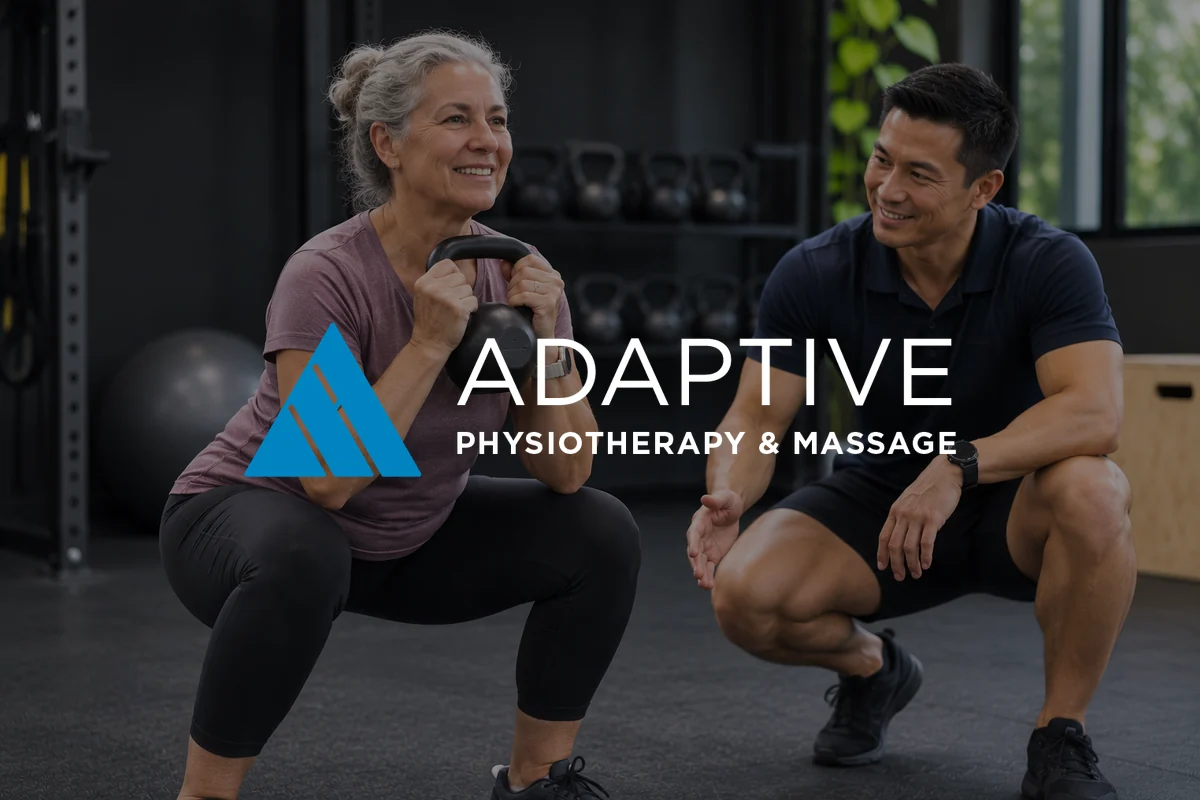
EXERCISE PHYSIOLOGY · CHRONIC HEALTH CONDITIONS · BOORAGOON
Living with a chronic health condition and not sure what exercise is right for you?
Maybe you've been told that regular exercise would help with your diabetes, heart health, arthritis or another ongoing condition. You know you should be doing more, but where do you start? How hard should you train? And how do you build a routine that works around your symptoms, energy and everyday life?
You don't need to work all of that out on your own. Exercise physiology provides individualised guidance to help you move more, build physical capacity and feel more confident being active.
At Adaptive Physiotherapy & Massage in Booragoon, our approach starts with your health, your goals and what you're currently able to do. From there, we can help you work towards a manageable exercise routine.
What is exercise physiology?
Accredited Exercise Physiologists (AEPs) are university-qualified allied health professionals who use exercise and physical activity to help people manage chronic health conditions, injuries and disabilities.
Unlike following a generic online workout, exercise physiology begins with understanding your medical history, activity level, symptoms and goals. An individualised programme may include strength training, cardiovascular exercise, balance work, mobility and practical advice for becoming more active.
Learn more about Exercise Physiology at Adaptive in Booragoon and what an initial appointment involves.
How can exercise help with chronic health conditions?
Regular physical activity can be an important part of managing long-term health. The type, amount and intensity of exercise depend on the condition and the individual. Our role is to help you find a starting point that feels achievable, then progress it appropriately.
Diabetes and metabolic health
A combination of strength and aerobic exercise can support blood glucose management, physical fitness and day-to-day energy. The programme should consider medication, blood glucose responses and individual medical advice.
Heart health and blood pressure
Appropriately prescribed physical activity can help improve cardiovascular fitness and support blood pressure management. Exercise intensity and any precautions depend on your medical history and current condition.
Arthritis and joint stiffness
Targeted strengthening, mobility and low-impact conditioning can help people manage stiffness and improve their confidence with walking, stairs and everyday movement.
Bone health and osteoporosis
Suitable resistance and weight-bearing exercises can support muscle and bone health. Exercises need to account for fracture risk, previous fractures and personal capacity.
Persistent pain and reduced mobility
Gradually rebuilding strength, endurance and activity tolerance may help people do more of what matters to them, even when symptoms have been present for some time.
Mental health and wellbeing
Enjoyable, sustainable movement can contribute to mood, sleep and overall wellbeing. Exercise may complement other recommended healthcare rather than replace it.
People managing more than one condition can also benefit from an exercise plan that considers those needs together rather than treating them separately.
The goal isn't simply to exercise more. It's to build enough movement, strength and physical capacity to make everyday life easier to manage, while finding a routine you can maintain.
What does an individualised exercise programme involve?
There is no single programme for everyone with a chronic condition. What matters is where you're starting, what your health allows and what you'd like to improve.
Assessment and a conversation
We discuss your health history, symptoms, medication considerations, current activities and goals. Depending on your needs, the assessment may include strength, balance, mobility and fitness measures.
Strength and resistance training
Exercises might include sit-to-stands, squats to a suitable height, step-ups, rowing movements, calf raises or resistance machines. The right choice is one you can perform and progress with confidence.
Cardiovascular conditioning
Walking, cycling or other aerobic activity can be introduced or progressed according to your fitness and medical needs. This might mean short, comfortable sessions at first, building towards longer periods over time.
Mobility, balance and everyday movement
Where relevant, we can work on getting up from a chair, using stairs, turning, walking on different surfaces or moving with more control and confidence.
Review and progression
As you build capacity, the programme changes. We reassess what has improved, what still feels difficult and how to adjust exercise around good and bad days.
What if you haven't exercised for a long time?
That's a common starting point. You don't need to be fit or comfortable in a gym before seeing an exercise physiologist. An effective programme can begin with short walks, simple movements and manageable strength exercises.
Some people need more guidance because of fatigue, pain, medication or concerns about how their body will respond. Others are already active but want to train in a way that better supports their health. The programme should suit the person in front of us.
Rest and recovery also matter. A successful routine isn't about pushing hard every day; it's about choosing the right amount of activity and being able to build on it.
How Adaptive can help you build a sustainable routine
At Adaptive, exercise physiology is about more than handing you a list of exercises. We aim to help you understand what you're doing, why you're doing it and how to progress.
That reflects our wider philosophy of Movement. Strength. Recovery. We look at how well you move, the physical capacity you have and how you respond to activity, then adapt the plan to support what matters to you.
Where it improves your care, we can also collaborate with your GP or other treating professionals. If pain or an injury calls for a more specific assessment, our physiotherapy team in Booragoon may be relevant. If you're looking for suitable hands-on care for muscular discomfort, remedial massage is another service available at Adaptive.
These are different options, not a requirement to book several services. We start with your needs and recommend what is appropriate.
What happens at your first exercise physiology appointment?
Your first appointment is an opportunity to talk about the condition you're managing, what you've already tried and what you'd like to achieve. You may be asked to perform some comfortable movement or strength tasks so your exercise physiologist can see where to start.
We can then explain a suitable approach, demonstrate exercises and discuss how to fit activity into your week. Wear comfortable clothing and bring any relevant medical information, particularly if your condition or medication affects exercise.
Exercise alongside your medical care. For people with unstable symptoms, new chest pain, unexplained breathlessness or other significant changes in health, appropriate medical review may be necessary before starting or progressing exercise. Your existing medical treatment shouldn't be changed without advice from the relevant clinician.
Frequently asked questions
Do I need a referral?
You can generally book a private exercise physiology appointment without a GP referral. Certain funding pathways, including Medicare, DVA and workers compensation, have their own referral or eligibility requirements.
Will the programme be too hard if I have arthritis or fatigue?
It should be designed around your starting point. That can mean lower-intensity work, shorter sessions or modified movements initially, with changes made as your tolerance improves.
Is strength training suitable for people with chronic conditions?
Strength training is beneficial for many people, but the exercise selection and loading should account for the individual's health, symptoms and any medical precautions.
Can exercise physiology work alongside other treatment?
Yes. When useful, exercise physiology can complement care from your GP, physiotherapist or other healthcare professional. The aim is a coordinated approach that fits your needs.
Related services and reading
- Exercise Physiology in Booragoon — learn about the service and appointments.
- Managing joint stiffness and arthritis with exercise physiology — a closer look at exercise for mobility.
- Physiotherapy in Booragoon — assessment and rehabilitation for pain, injury and function.
- Remedial Massage in Booragoon — a separate hands-on service for suitable muscular discomfort.
EXERCISE PHYSIOLOGY · ADAPTIVE BOORAGOON
Find out how exercise physiology can help you
Whether you're managing diabetes, arthritis, heart health concerns or another chronic condition, we can help you explore an individualised exercise plan that fits your current capacity and goals.
Adaptive Physiotherapy & Massage
27 Shields Crescent, Booragoon WA 6154
(08) 9468 3555 · Free onsite parking
References
- Australian Government Department of Health, Disability and Ageing. Recommendations for people with chronic conditions (2026). Guidelines.
- Exercise & Sports Science Australia. What is an Accredited Exercise Physiologist? Professional information.
- Healthdirect Australia. Exercise physiologist. Patient information.
Are you dealing with a chronic health condition? If so, it is important to explore the benefits of Exercise Physiology. Working with an Accredited Exercise Physiologist can help individuals realize potential mental and emotional health gains by creating personalized plans that meet their specific needs.
Exercise Physiologists specialize in developing individualized programs for those looking to improve their physical and mental wellbeing. They have a comprehensive understanding of how different activities, environmental factors, and dietary habits all interact with each other to affect our overall health outcomes. For those living with chronic conditions such as diabetes or hypertension, taking a proactive approach towards better physical health through controlling high blood pressure and cholesterol levels has been shown to reduce the risk of developing more serious complications; seeking out assistance from an Accredited Exercise Physiologist is essential towards this effort as they create individualized plans based on personal needs and preferences.
Aside from providing physical benefits, an Accredited Exercise Physiologist can also help develop a healthier lifestyle by teaching beneficial relaxation techniques such as deep breathing exercises. They will also give you nutritional advice so that meals eaten throughout the day don’t cause a spike in sugar levels due to the intake of simple sugars but rather provide your body with complex carbohydrates for sustained energy over longer periods of time.
Simply put, being proactive is necessary when it comes to managing one’s physical health; seeking out the help of an Accredited Exercise Physiologist provides tailored plans based on personal needs and preferences while creating methods to make enjoyable physical activities part of daily routines. The incorporation of regular physical activity into one’s daily life has been proven to reduce the risk of long-term complications associated with chronic illnesses or existing treatments used to manage them.
If you’re looking for ways to improve your overall wellbeing while dealing with a chronic condition contact us today for a free consultation with one of our Accredited Exercise Physiologist!