
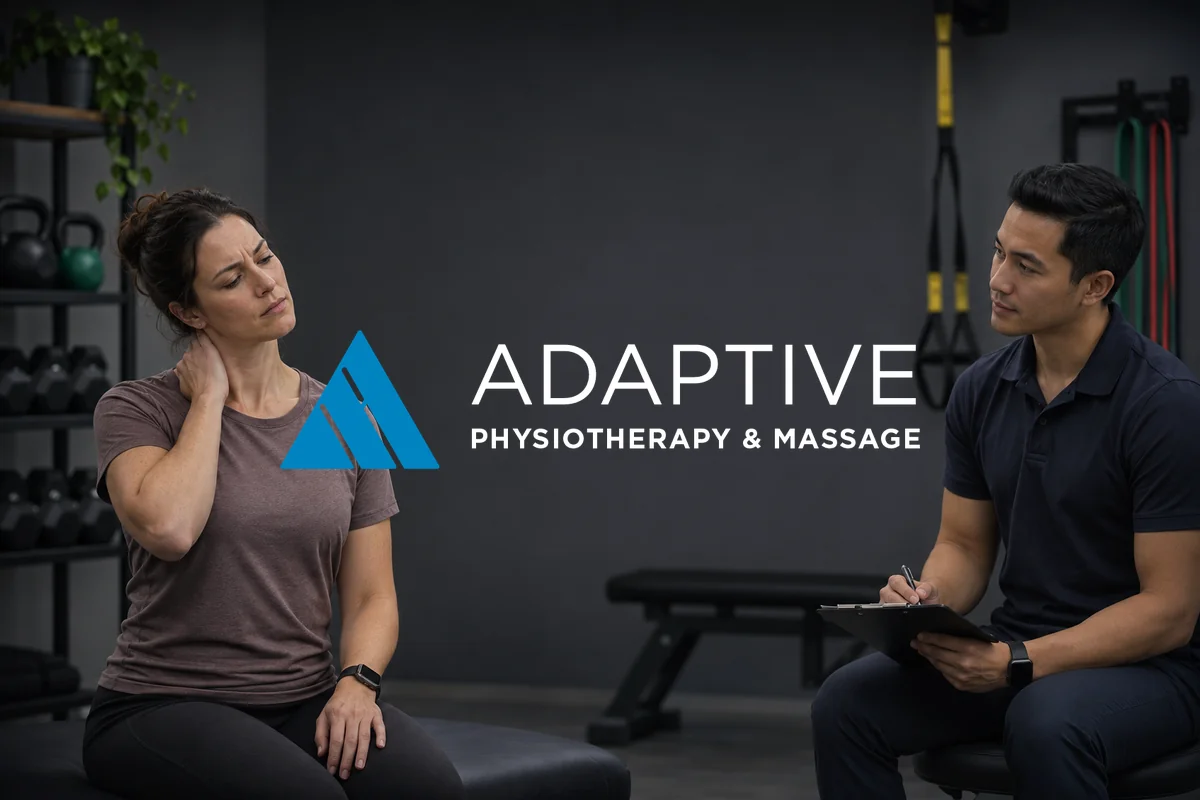
Neck pain / Patient guide
Woken up with a stiff, painful neck?
Yesterday you could turn your head normally. This morning, looking over your shoulder is difficult and even small movements hurt. This may be an acute wry neck — but the right next step depends on your symptoms.
01 / Understanding the problem
What is acute wry neck?
Acute wry neck, also called acute torticollis, is a sudden episode of neck pain and stiffness that can make it difficult to turn or straighten your head.
It can develop over a few hours or appear when you wake up. Some people notice that their head feels more comfortable slightly turned or tilted to one side. Others can keep their head straight but find certain movements sharply painful.
Muscle spasm is common in a typical wry-neck episode, but the term describes a pattern of symptoms rather than proving that one muscle, joint or disc is responsible. Sudden neck pain has several possible causes, which is why the history and examination matter.
For many people, symptoms gradually improve without needing a scan or a complicated treatment program. The initial aim is to check for concerning symptoms, help you move comfortably and make everyday activities manageable.
Waking with a stiff neck does not, by itself, tell us which tissue is involved. Treatment should be based on your symptoms, the examination and what you need to be able to do — not an assumed diagnosis.
02 / What you might notice
Common symptoms of a wry neck
Symptoms often feel worse on one side, although the pattern varies between people.
Difficulty turning your head
Looking over one shoulder, reversing the car or turning to speak with someone may be uncomfortable or noticeably limited.
Sudden neck pain
You may feel a sharp pain with certain movements and an ache or tightness when resting.
Spasm or tenderness
Muscles around the neck and upper shoulder may feel tight or tender, sometimes with the head held slightly to one side.
Disrupted sleep and activities
Getting comfortable in bed, sitting at a desk, dressing or completing ordinary tasks may be more difficult for a short period.
Pain travelling down the arm, pins and needles, numbness or weakness are not symptoms to simply assume are an uncomplicated wry neck. They need further assessment, particularly if new or worsening.
03 / Why it can happen
Why do people wake up with a stiff neck?
Sometimes symptoms follow sleeping in an unfamiliar position, a sudden movement, an unusually long drive or a change in normal activity. In many cases, there is no clear trigger.
It's tempting to blame a particular pillow, posture or movement. But a single sleeping position does not necessarily explain everything, and a painful morning does not mean you have permanently injured your neck.
Other conditions can also cause sudden neck discomfort, including neck-related nerve problems and, less commonly, medical conditions requiring urgent attention. An assessment is useful if the presentation is unusual, severe or not improving as expected.
04 / Practical early management
What should you do in the first day or two?
For a typical episode of sudden neck stiffness without concerning symptoms or a significant injury, gentle activity is usually more useful than complete rest. You don't need to force your neck to move normally straight away.
- 1Move gently within a comfortable range
Try small, slow head turns and ordinary movement as tolerated. Reduce the range if a movement causes sharp or escalating pain; don't force a stretch.
- 2Use heat or cold if it helps
A wrapped heat pack may ease the feeling of stiffness. Some people prefer cold. Protect your skin and use whichever feels more comfortable.
- 3Adjust your day temporarily
Take short movement breaks, change positions and modify activities that are particularly uncomfortable. Aim to keep participating in what you safely can.
- 4Ask about pain relief when needed
A pharmacist or GP can advise whether suitable pain-relief medication is appropriate for you, based on your medical history and other medicines.
Important for driving: If you cannot turn your head enough to check traffic and blind spots safely, do not drive or cycle until you can do so safely.
05 / Keeping it practical
What should you avoid while your neck is very sore?
Avoid aggressive stretching or twisting
You don't need to push into sharp pain or try to crack your neck to make it move again. Start with comfortable movement and build from there.
Don't keep your neck still all day
Unless a clinician has advised otherwise after an injury, prolonged rest or routine use of a neck collar is generally not recommended for straightforward neck pain.
There isn't one correct sleeping posture or a special pillow that everyone needs. Choose a comfortable position that supports your head and allows you to rest. As symptoms ease, gradually return to the activities you've temporarily changed.
06 / Individualised assessment and care
How can physiotherapy help with acute wry neck?
Physiotherapy can help when pain or restricted movement is affecting your day, when you're unsure how to return to activity, or when symptoms are not following the expected course.
At Adaptive Physiotherapy & Massage in Booragoon, the starting point is your presentation — when the symptoms began, where you feel them, what makes them better or worse, and what you need to get back to.
Assess and screen
We consider your symptoms, recent history, neck movement and, where appropriate, neurological function to determine whether physiotherapy or medical review is the right next step.
Guide movement and relief
Advice, comfortable movement and selected hands-on treatment may help you manage pain and move more easily. Not everyone needs the same techniques.
Review and progress
As symptoms improve, we can help you restore normal activity, adjust exercise where needed and revisit the plan if progress is slower than expected.
07 / Hands-on care
Can remedial massage help a stiff neck?
For some people, massage can be a useful option for managing muscle tightness, tenderness and discomfort around the neck and shoulders. It may provide short-term relief and help you feel more comfortable moving.
Adaptive offers Head, Neck & Face Massage and Remedial Massage in Booragoon. These are individualised treatments in their own right, not simply an addition to physiotherapy.
Massage is not necessary for every episode of neck pain and should not replace assessment when symptoms suggest a nerve problem, significant injury or other medical concern. With a very painful, recently developed neck, the choice and intensity of hands-on care should be guided by comfort and clinical judgement.
08 / Recovery expectations
How long does a wry neck usually last?
Many uncomplicated episodes start to ease over a few days, and symptoms commonly settle within about a week or two. The actual course varies with the cause and individual circumstances.
Feeling better doesn't always happen in a straight line. Turning your head may improve before longer periods of desk work, sport or other activities feel comfortable again.
If pain is severe, getting worse, not beginning to improve after several days or continuing to interfere with normal life, arrange an assessment rather than assuming you should simply wait it out.
When symptoms recur frequently, it's worth reviewing the pattern more broadly — including your activities, comfort, function and exercise needs — instead of relying on one short-term treatment each time.
09 / The Adaptive approach
Movement, Strength and Recovery — applied to your needs
At Adaptive, these principles work together across physiotherapy, rehabilitation and massage. A short-lived stiff neck may only need simple advice. For someone with ongoing or repeated symptoms, the emphasis may be different.
Movement
Gradually restoring comfortable head and neck movement for the tasks you need to do.
Strength
Building neck, shoulder and upper-body capacity when longer-term exercise is relevant to your goals.
Recovery
Managing discomfort, adjusting demands temporarily and supporting a sensible return to normal activity.
Some people with ongoing symptoms may benefit from Physio-Guided Exercise & Strength Training. It is not required for everyone with an acute stiff neck. You can also explore the Adaptive approach.
10 / When to seek help
When is a stiff neck more than a routine wry neck?
Sudden neck pain is often uncomplicated, but some symptoms need medical assessment rather than a routine massage or physiotherapy appointment.
Seek emergency medical help
Call 000 for sudden severe neck pain after a significant accident, or if neck symptoms occur with signs of a serious medical emergency.
- A sudden, unusually severe headache, especially with new neck pain.
- Fever with marked neck stiffness and severe headache, confusion, light sensitivity or a rash.
- New difficulty speaking, loss of coordination, double vision, fainting or other sudden neurological symptoms.
- Neck pain accompanied by chest pain, shortness of breath or sweating.
If you think there is a medical emergency, seek emergency care rather than trying exercises or waiting for an appointment.
Arrange prompt medical review if you develop pain travelling down the arm with new pins and needles or numbness, arm or hand weakness, significant worsening pain, or symptoms that began after an injury. If symptoms are not improving as expected, a GP or physiotherapist can help determine whether further assessment is needed.
Uncomplicated acute neck pain does not usually require an X-ray or MRI. Imaging decisions depend on the medical history, examination findings and whether a specific concern needs investigating.
11 / Common questions
Frequently asked questions
Can I wake up with a wry neck even if nothing happened the day before?
Yes. Some people notice symptoms after an unusual sleeping position or activity, while others cannot identify a trigger. An obvious injury is not always present in a typical acute wry-neck episode.
Should I stretch my neck when it feels stuck?
Gentle, comfortable movement is often appropriate for an uncomplicated episode. Avoid forcing your head through sharp pain or trying to suddenly restore full range. If symptoms are severe, unusual or follow an injury, seek assessment first.
Is a heat pack or ice pack better?
Either may provide short-term comfort. A wrapped heat pack is commonly used for stiffness, while some people prefer cold. Use a safe temperature, protect your skin and choose what feels helpful.
Should I stay home from work?
That depends on the work and your symptoms. Many people can keep doing lighter duties with movement breaks and temporary adjustments. If your job involves driving, machinery, heavy loads or tasks requiring full neck movement, safety matters more than pushing through.
Do I need a neck brace or collar?
Not routinely for uncomplicated neck pain. Keeping the neck gently moving is usually preferred. A collar may be appropriate in particular injuries or medical situations, but only when prescribed by a clinician.
Can massage help acute wry neck?
Massage may help some people manage surrounding muscle discomfort or tension. It is optional, should be comfortable and is not a substitute for medical assessment when symptoms are unusual or concerning.
Do I need an X-ray or MRI if I can't turn my head?
Not necessarily. Reduced movement on its own does not mean a scan is needed. Imaging depends on your history, examination and any concerns such as trauma, neurological changes or other red flags.
When should I book physiotherapy for a stiff neck?
Consider an assessment if pain or stiffness is disrupting daily activities, you're unsure how to manage it, or symptoms aren't beginning to improve. New weakness, numbness, fever, severe headache or other warning signs require medical assessment rather than routine treatment.
Keep exploring
Related Adaptive services
Clinical references and further reading
- Healthdirect Australia — Torticollis (wry neck)
- Healthdirect Australia — Neck pain, self-care and when to seek help
- Better Health Channel — Neck pain and acute wry neck
- NHS — Neck pain and stiff neck
General information only, not a diagnosis. A registered clinician should review this article before publication.
Adaptive Physiotherapy & Massage / Booragoon
Need help getting your neck moving comfortably again?
If a stiff, painful neck is affecting your everyday activities, our physiotherapists can assess your symptoms, explain the findings and discuss an individualised plan. If medical care is more appropriate, we'll guide you towards the right next step.
Movement. Strength. Recovery. Helping you stay active, capable and doing what matters to you.
27 Shields Crescent, Booragoon WA 6154 · (08) 9468 3555 · Free onsite parking