
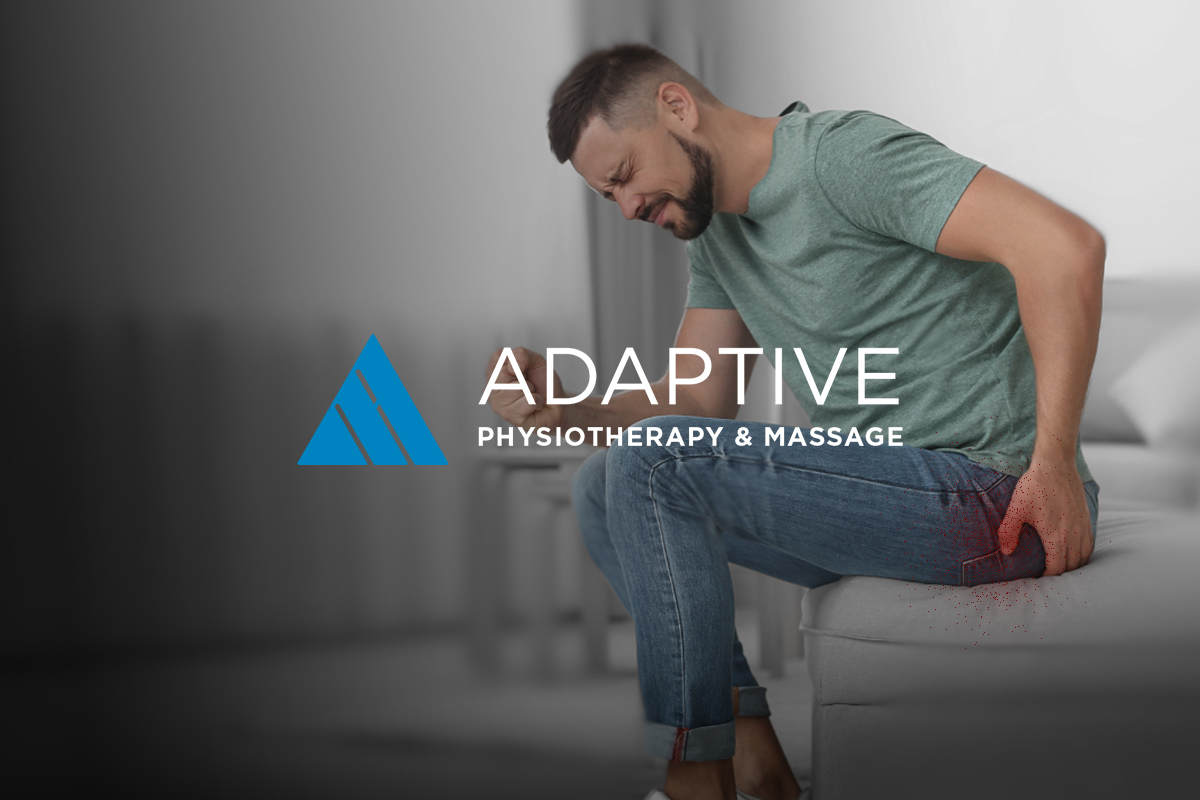
When sciatica makes sitting, walking or sleeping uncomfortable, it can affect far more than your back or leg.
Perhaps you can only sit for ten minutes before shifting position, a relaxed walk has become difficult, or a good night's sleep feels out of reach. Everyday movement can start to feel like something you have to plan around.
At Adaptive Physiotherapy & Massage in Booragoon, we start by understanding how your symptoms affect your life—and what you want to get back to doing. There may be ways to manage symptoms and progressively regain confidence in movement.
What is sciatica, really?
Sciatica describes pain associated with irritation of a nerve supplying the leg, often involving a nerve root in the lower back. The pain can travel through the buttock and into the leg, sometimes with tingling, numbness or weakness.
There isn't one explanation for every case. Disc-related nerve irritation and other spinal conditions may contribute, while muscle discomfort can coexist with nerve pain. A good assessment considers the pattern of symptoms, neurological signs and how you're functioning—not assumptions about posture or one supposedly weak muscle.
When to seek urgent medical attention
Seek emergency medical assessment if you develop new difficulty passing urine, loss of bladder or bowel control, numbness around the groin or saddle area, or significant or rapidly progressing leg weakness. These can be signs of a serious condition requiring urgent care.
Why symptoms can keep coming back
It can be frustrating to try stretches, heat, medication or rest and still struggle with the same movements. Sometimes those approaches help; sometimes they don't suit the particular presentation or the stage of recovery.
Generic advice
One stretch or exercise won't suit everyone. Some positions ease symptoms; others can aggravate them.
Too much or too little
Continuing activities at an intolerable level—or withdrawing from everything—can both make everyday life harder to manage.
No progression plan
Even when symptoms settle, you may need support to rebuild confidence and tolerance for work, walking or exercise.
Understand the symptoms. Find movement you can tolerate. Build strength and capacity progressively, at a pace that fits you.
What guided physiotherapy looks like
Our physiotherapy service in Booragoon starts with an individual assessment. We discuss your symptoms and goals, review movement and strength where appropriate, and screen for signs that may need further medical investigation.
Depending on what we find, care might include advice on activity and positions, graded movement, strengthening, symptom-management strategies or hands-on treatment. Some people also find remedial massage helpful for associated muscle tension, but massage is not presented as a treatment for nerve compression itself.
Our philosophy: We don't start with a standard exercise sheet or a service to sell. We start with you—where you are now, what matters to you and what support is most appropriate.
Recovery is a progression, not a fixed calendar
Sciatica can improve over time, although recovery varies considerably. Rather than promising a particular result by a certain week, we adapt the plan to your symptoms, physical capacity and daily demands.
Settle symptoms and understand triggers
Identify tolerable positions and movements, discuss pain-management options, and make practical adjustments to work or daily activities when useful.
Build comfortable movement and strength
Gradually increase tolerance for sitting, walking, bending and exercise through suitable movement and strengthening progressions.
Return to what matters
Work towards daily routines, hobbies, sport or gym training with a plan that can be reassessed as your confidence and capacity change.
For those who need a more structured transition back into exercise, our rehab and exercise program may be worth discussing once it is appropriate for their stage of recovery. Not everyone needs ongoing gym-based rehabilitation.
Practical ways to get started
Keep moving within tolerance
Short, comfortable walks or frequent movement breaks may suit you better than prolonged inactivity.
Adjust, don't force
Try changing sitting positions or breaking longer tasks into manageable periods; avoid exercises that repeatedly worsen leg symptoms.
Know when to check in
Seek an assessment for persistent, worsening or function-limiting symptoms, particularly if you develop numbness or weakness.
Why choose Adaptive Physiotherapy & Massage?
At our Booragoon clinic, care is built around movement, strength and recovery. We aim to listen first, individualise treatment, explain your options and help you make progress towards the things you want to do.
That could be sitting through your workday, walking your dog, sleeping more comfortably or returning to training. We may use education, exercise, rehabilitation or hands-on care as appropriate, reviewing and adapting the approach along the way.
We welcome people from Booragoon, Melville, Myaree and surrounding suburbs at our one clinic at 27 Shields Crescent, Booragoon.
Let's work towards more comfortable movement.
If sciatic pain is making everyday life difficult, a physiotherapy assessment can help clarify what may be contributing and what options make sense for you.
This article provides general information and does not replace individual clinical assessment. Symptoms and recovery vary.