
Upper back / Practical patient guide
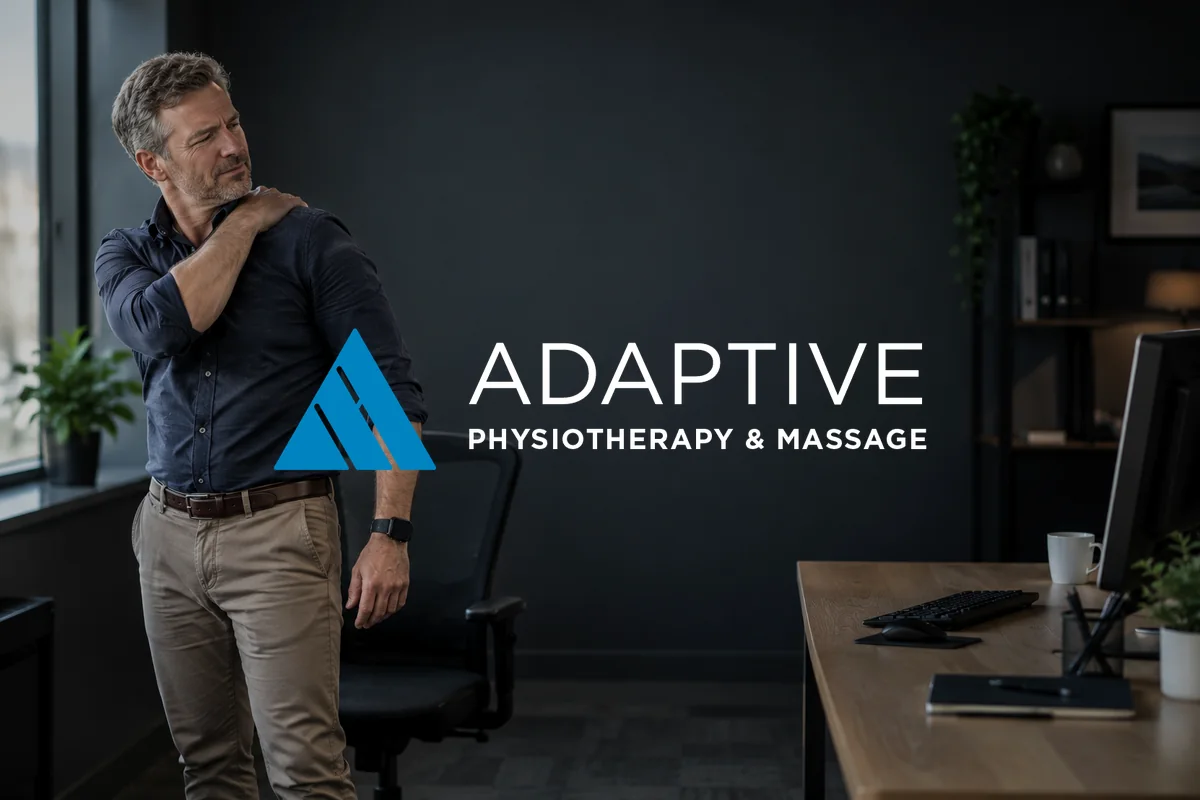
Upper-back pain after a day at your desk?
Maybe it starts as an ache between your shoulder blades, builds towards the end of the workday, or leaves your neck and shoulders feeling stiff. There are useful changes you can try — without assuming that your posture is the problem.
01 / Understanding your symptoms
Why might your upper back hurt after desk work?
If your upper back feels uncomfortable after sitting at a computer, the explanation may involve the demands of the workday rather than one damaged muscle or a particular way of sitting.
The thoracic spine is the middle and upper part of your back, between the neck and lower back. It works alongside your neck, ribs, shoulders and shoulder-blade muscles whenever you reach, turn, type or change position.
You might notice a dull ache between the shoulder blades, a feeling of tightness across the upper back, or stiffness when you stand after a long meeting. For some people the discomfort appears during work; for others it is more noticeable afterwards.
Most upper-back pain is not associated with a serious condition, but the location of pain alone does not tell us exactly which structure is contributing. If symptoms are new, unusual or accompanied by other concerning features, a medical review may be appropriate.
Time spent in one position, how the workstation fits you, activity outside work, sleep, stress and individual movement tolerance may all be relevant. A useful assessment looks at the whole picture rather than assigning blame to posture alone.
02 / What can contribute?
Common factors behind upper-back discomfort at work
These are examples of things worth exploring. They are not a checklist for diagnosing your own pain.
Not changing position much
Spending hours focused on a screen can mean fewer opportunities to move. An otherwise comfortable position may become uncomfortable when you stay in it for a long time.
Reaching or looking awkwardly
A screen that's difficult to see, a mouse that's too far away or working from a laptop on the sofa can increase the effort required by your neck, shoulders and upper back.
Long stretches without breaks
Concentrated work, back-to-back meetings and deadlines can make it harder to change tasks and positions. Work design can matter as much as chair design.
Symptoms felt in the upper back
Sometimes discomfort around the shoulder blades is related to the neck or shoulder. If turning your head, reaching or moving an arm changes symptoms, those areas may need assessment.
A change in your usual activity
Less movement during the week, new gym exercises or a sudden change in physical demands can affect how you tolerate work and everyday tasks. This doesn't mean you need to strengthen one particular muscle to 'correct' your posture.
Sleep, stress and fatigue
Disrupted sleep, a busy period or ongoing stress can influence pain sensitivity and how you respond to physical demands. These factors are part of understanding symptoms, not reasons to dismiss them.
03 / A common question
Is it because of bad posture?
Not necessarily. A slouched position does not automatically explain upper-back pain, just as sitting upright does not guarantee that you won't develop discomfort.
Some positions may feel better than others, and a well-adjusted workstation can reduce unnecessary reaching or strain. But you don't need to hold one ideal posture all day. Being able to change positions and move regularly is often a more practical goal than constantly checking whether you're sitting perfectly.
Less useful: trying to stay perfectly upright
Holding your shoulders back and sitting rigidly for hours can become tiring. It may also make you focus on posture without addressing the length or demands of your workday.
More useful: work comfortably and vary your position
Set up the screen and keyboard so they suit you, use supportive seating where helpful, and create opportunities to stand, walk, stretch or change tasks.
WA WorkSafe recommends adjustable, appropriately designed workstations and a mix of sitting, standing and movement. The aim is a comfortable setup that fits the worker and the task, not one rigid position for everyone.
04 / Practical changes
What can help during the workday?
You don't need a complicated routine to begin. Start with changes that are realistic for your work, and adjust them according to your symptoms and activity tolerance.
Change position regularly
Stand up between tasks, take a brief walk, or move while you're on a call. Around every 30 minutes is a useful prompt if your work permits — not a rule you must follow precisely.
Keep your back and shoulders moving
Try gentle shoulder rolls, turning your upper body or moving your arms through a comfortable range. You don't need to force a stretch or push through sharp pain.
Reduce awkward reaching
Bring the keyboard and mouse closer, position the screen where it's easy to view, and use the chair's support and adjustments to suit your body and task.
Include activity outside work
Walking and other enjoyable physical activity can help maintain general fitness and movement. Your activity plan does not have to be limited to a few 'posture exercises'.
What if you're in meetings all day? Small changes still count: stand when reading, walk to get water, take calls away from your desk when practical, or build a short movement break between meetings.
05 / Workstation checklist
Does your workstation need adjusting?
An ergonomic setup should make your work more comfortable and practical. It doesn't have to be expensive or unusually elaborate.
At a desk
- Keep the screen easy to see without repeatedly craning your neck.
- Place the keyboard and mouse within comfortable reach.
- Use chair height, back support and foot support to suit you.
- Allow enough space to change position comfortably.
Working from a laptop
- For prolonged use, consider a separate keyboard and mouse.
- A laptop stand or external monitor may make screen height easier to adjust.
- Alternate tasks and positions where possible.
- Remember that a standing desk is another option, not a requirement to stand all day.
Sometimes a change in work organisation — such as fewer uninterrupted screen-work blocks — may be more useful than buying a new chair. WA WorkSafe's office ergonomics guidance is a useful general resource.
06 / Movement beyond the desk
Should you stretch or strengthen your upper back?
Gentle movement or stretching may make stiffness feel more comfortable, but there is no single essential stretch for everyone with upper-back pain after desk work.
For some people, progressive exercise may help build capacity for the demands of work, lifting, sport and everyday life. This might involve upper-body resistance exercises, general conditioning or activities that make the upper back, neck and shoulders work in different ways.
How much exercise is appropriate? That depends on your symptoms, current activity and goals. If a movement causes marked or lasting aggravation, the exercise, intensity or amount may need adjusting.
Some people benefit from an independent home program. Others prefer more support with physio-guided exercise and strength training. The right choice follows from your assessment rather than assuming everyone needs gym-based rehabilitation.
07 / Individualised care
How can physiotherapy help with upper-back pain after desk work?
A physiotherapist can help work out whether your symptoms are likely to be musculoskeletal, what might be aggravating them, and whether another form of assessment is appropriate.
Assess
Discuss your symptoms, work habits, exercise, sleep and goals. Examination may include neck, shoulder and upper-back movement, strength, function and neurological tests when relevant.
Individualise
Choose suitable strategies — movement changes, workstation advice, education, exercise or hands-on care — based on what is most useful for you rather than a standard posture correction plan.
Progress
Reassess how you're managing your workday, activity and exercise. Gradually build the capacity you need and adapt the plan if your symptoms or goals change.
At Adaptive Upper Back Physiotherapy in Booragoon, we focus on understanding your circumstances and helping you return to the activities that matter to you.
Where neck movements or symptoms are prominent, our neck physiotherapy service may be the most relevant starting point. If reaching, lifting or shoulder movement is involved, a shoulder physiotherapy assessment may also be appropriate.
08 / Hands-on care
Can remedial massage help?
For some people, remedial massage is a useful choice for muscular discomfort, tension and relaxation after sustained or demanding work. It may provide short-term symptom relief and help you feel more comfortable moving.
Remedial Massage in Booragoon is a service in its own right. People may choose it as a standalone treatment, and where appropriate it can also be part of a broader plan alongside physiotherapy or exercise.
Adaptive also provides Head, Neck & Face Massage, which may be relevant when neck and shoulder muscle discomfort is a key concern.
Massage is not a necessary treatment for every episode of upper-back pain, and it won't be appropriate for symptoms requiring urgent medical investigation. If pain keeps returning, it may be worth considering how your workday and activity demands fit into the overall picture as well.
09 / The Adaptive philosophy
Movement, Strength and Recovery in everyday life
We don't start with a treatment or a particular exercise. We start with where you are now, what you need to do and what you want to get back to.
Movement
Finding more comfortable ways to move throughout the day, including changing positions and returning to activities you value.
Strength
Building the physical capacity for work, lifting, training and life where progressive exercise is useful.
Recovery
Managing symptoms and workload, allowing sufficient rest, and adjusting your routine when needed.
Movement, Strength and Recovery work together across physiotherapy, massage and rehabilitation. Learn more about the Adaptive approach.
10 / Knowing when to seek help
When should upper-back pain be medically assessed?
Upper-back discomfort after desk work is often musculoskeletal, but not every pain around the shoulder blades is caused by sitting or muscle tension.
Call 000 if you may be experiencing an emergency
Sudden, severe or unusual upper-back pain needs urgent attention, particularly when it occurs with:
- Chest pain, pressure or tightness, especially with pain spreading to the arm, jaw or back.
- Difficulty breathing, shortness of breath, collapse or fainting.
- Cold sweats, nausea, marked dizziness or a sudden feeling of being seriously unwell.
Do not drive yourself if an emergency is suspected.
Arrange prompt medical assessment for pain after significant injury; unexplained fever, weight loss or night pain; pain related to breathing; new or worsening arm weakness, numbness or balance problems; or symptoms that are progressively worsening. Persistent pain that interferes with work, sleep or daily activities is also worth discussing with a GP or physiotherapist.
Where there are no concerning features, a physiotherapy assessment can help you understand your options. Imaging is not routinely required for uncomplicated upper-back pain, and whether it is useful depends on the history and clinical findings.
11 / Your questions answered
Frequently asked questions
Why does my upper back ache after sitting all day?
Long periods without changing position, the demands of your workstation and overall workload can all contribute. Symptoms don't prove that your posture has damaged your back. An assessment can help if pain is persistent or repeatedly returning.
Is sitting up straight the best way to prevent upper-back pain?
There isn't one posture you must hold continuously. A comfortable, adjustable setup is useful, but changing positions and breaking up prolonged sitting are often more practical than trying to remain perfectly upright all day.
How often should I get up from my desk?
Safe Work Australia suggests breaking up prolonged sitting, with around 30 minutes being a useful guide. The exact timing can be adapted to your work; even brief opportunities to stand or move may help you vary your day.
Will a standing desk solve my upper-back pain?
Not necessarily. A sit-stand desk may make it easier to change positions, but standing in one place all day is not the goal either. Workstation fit, task changes, activity and symptom management still matter.
Should I stretch or strengthen my upper back?
Either may be useful depending on your presentation. Gentle mobility and regular activity may help with stiffness, while progressive strengthening can support physical capacity. You do not need one universal 'posture exercise' program.
Can upper-back pain actually come from my neck?
Yes, sometimes. If neck movement changes the pain, or you have symptoms travelling into an arm, it may be important to assess your neck and neurological function. The pain location alone cannot confirm the cause.
Can remedial massage help with desk-related tension?
Massage may provide short-term comfort and relaxation for some people with muscular discomfort. It can be selected as its own service or combined with other care when appropriate, but should not replace medical review for concerning symptoms.
When should I see a physiotherapist?
Consider an appointment if symptoms keep returning, affect your work or everyday activities, or you're unsure how to return to exercise comfortably. Seek medical attention first for emergency symptoms or other warning signs described above.
Keep exploring
Related Adaptive services
Clinical and workplace references
- Healthdirect Australia — Upper back pain (thoracic pain)
- WorkSafe WA — Office ergonomics
- Safe Work Australia — Sitting and standing
- Healthdirect Australia — Chest pain and emergency symptoms
General information only. This article is not a personal diagnosis or treatment plan. Clinical review is required before publishing.
Adaptive Physiotherapy & Massage / Booragoon
Upper-back pain affecting your workday?
Our physiotherapists can assess your symptoms, review the demands of your work and activity, and help you develop an individualised plan. If another medical pathway is more appropriate, we'll discuss that with you.
Movement. Strength. Recovery. Helping you stay active, capable and doing what matters to you.
27 Shields Crescent, Booragoon WA 6154 · (08) 9468 3555 · Free onsite parking