
Osteoporosis Physiotherapy in Booragoon
Low bone density? Let’s work on what you can do.
Been told you have osteoporosis or osteopenia? You may know exercise is important for your bones, but feel unsure which exercises to do, how much weight to lift or where to begin.
At Adaptive, our physiotherapists help you turn that advice into a practical plan. We consider your bone health and fracture history, assess your starting point and guide suitable strength and weight-bearing exercise.
Start with an individual physiotherapy assessment and take a positive step towards supporting your bone health.
Qualified physiotherapists · Individualised exercise guidance · Free onsite parking

Your diagnosis is only part of your story. Whether you have just received a bone density result or have managed osteoporosis for years, we start with your needs, abilities and goals.
Bone Health Needs More Than General Exercise Advice.
Being active matters, but not all exercise challenges your bones in the same way. Our physiotherapists can guide resistance training and suitable weight-bearing exercise, with the type of loading and progression matched to your history and capacity.
Balance work may also help if falls are a concern, but it is one part of a bone health plan—not the whole plan. We explain what to do, why it matters and how to build from your starting point.
Know what to do next for your bone health.
Physiotherapy focused on bone health
Get exercise guidance that considers osteoporosis or osteopenia, your physical capacity and any previous fractures—not a generic exercise sheet.
A suitable place to begin
Never used weights before? Already active but unsure what is appropriate? We help you find a starting level and explain each exercise.
The right exercise for your bones
Your physio can guide progressive resistance and, where suitable, weight-bearing or impact exercise based on your bone health and fracture considerations.
Strength for the life you want
Work towards the strength and physical confidence to keep walking, gardening, travelling and doing the everyday activities that matter to you.
Told You Have Osteoporosis or Osteopenia. What Now?
You want to do something positive for your bones. But where do you start?
Maybe a recent bone density scan raised concerns. Or perhaps you have known about low bone density for a while but have never been shown how to exercise for it.
You hear that weights and exercise can help, yet the advice can feel confusing. You need guidance that takes your bones, your health and your goals into account.
Worried about a fracture?
You want to keep active, but you are unsure how much loading is appropriate for your bones or whether certain movements need adjusting.
Unsure about lifting weights?
You have heard that strength training is good for bone health, but which exercises should you do—and how heavy should you go?
Wondering if walking is enough?
Walking has many benefits, but supporting bone strength may also call for targeted resistance and weight-bearing exercise.
Want to stay capable for years to come?
You want a bone health plan that supports your future—not one that leaves you avoiding the activities you enjoy.
Your Bones Need the Right Challenge—Not Just More Activity.
When it comes to bone health, the type of exercise matters. Progressive resistance training and appropriately selected weight-bearing activity can support bone and muscle strength. Balance work can be helpful for reducing falls risk, but it does not replace exercises that load your bones.
We help you choose a suitable starting point, understand the purpose of each exercise and progress as your strength and capacity develop.
Understand your bone health starting point
We consider your diagnosis, any available DXA/DEXA scan results, previous fractures, current activity and what you want to keep doing.
Build strength with resistance exercise
Learn appropriately selected strength exercises, with guidance on technique and progressive resistance—not just a set of light exercises forever.
Choose bone-loading activity appropriately
Where suitable, your plan can include weight-bearing or impact exercise, chosen with your bone health, abilities and fracture risk in mind.
Progress your exercise with a plan
Your plan should reflect the challenge you can manage now and adapt as you improve. We review and adjust the loading over time.
Exercise Works Alongside Your Medical Care.
Physiotherapy does not replace osteoporosis medication, nutrition advice or bone health monitoring. Your scan results, fracture history and medical advice help shape your exercise plan. We can collaborate with your GP or specialist when needed.
Important: New severe back pain after a fall, a suspected fracture or sudden major difficulty moving needs prompt medical assessment. Tell your physiotherapist about previous fractures and relevant medical advice.
Start With an Assessment. Leave With a Way Forward.
You do not need to work out your exercise plan before coming in. We listen to your concerns, consider your bone health and assess relevant strength and movement. Then we discuss the types of exercise that may suit you and how to get started.
Talk about your bones and your goals
If available, bring your bone density scan or report, relevant medications and any advice following a previous fracture. Tell us what activities matter to you.
Find your exercise starting point
We assess relevant movement and strength, and consider posture, balance or everyday tasks where helpful. The assessment is adapted to your history and abilities.
Understand your next steps
Discuss appropriate resistance and weight-bearing exercise, how to progress and whether independent or supervised training would suit your needs.
You are booking a physiotherapy assessment—not signing up for a gym or group class. We will explain the options, and you can choose what fits your circumstances.
Prefer to speak with us first? Call (08) 9468 3555
Exercise That Supports Bone Strength—Not Just Balance.
Your bone health is about more than a number on a scan. It is also about giving your bones an appropriate physical challenge while maintaining the strength to do what matters to you.
With physiotherapy guidance, you can learn a programme that combines suitable loading and progressive strength work, adjusted for your history, ability and goals.
Progressive resistance training
Learn strength exercises with resistance that can be gradually increased as your technique, capacity and confidence develop.
Weight-bearing and impact where appropriate
Certain types of weight-bearing or impact activity can challenge bones. Your physio can help decide what is suitable for your circumstances.
Balance and falls prevention when relevant
If you have concerns about falling, balance and steadiness exercises may complement your bone-strengthening plan.
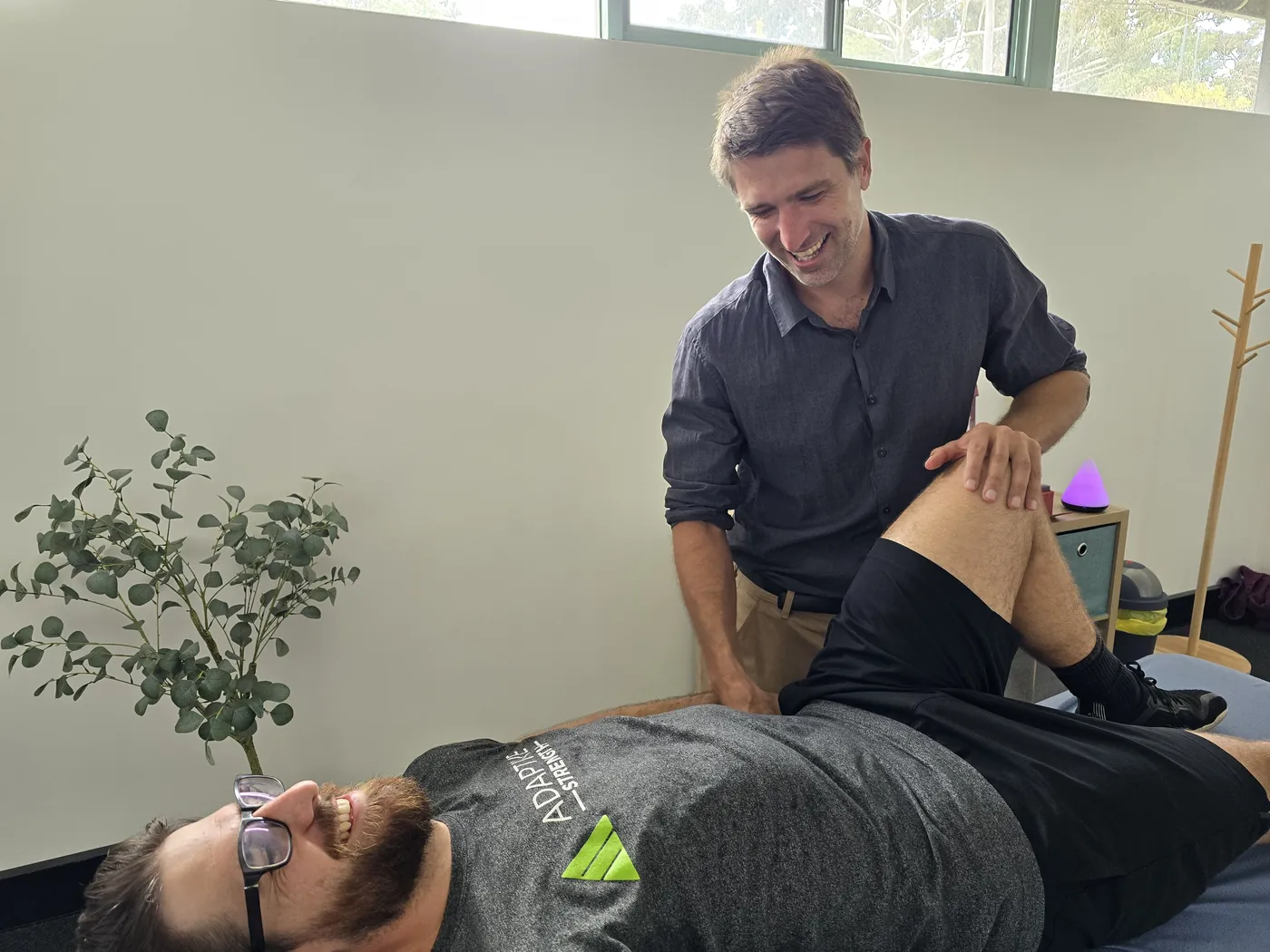
Your starting point comes first. We choose the exercises to suit your bone health, medical history and goals—not your age alone.
A Bone Health Exercise Plan You Can Actually Follow.
Maybe you would rather exercise at home. Perhaps you want help learning weights and using the right technique. The best plan is one you understand and can follow consistently.
We can discuss both options. Where appropriate, Adaptive also offers Physio-Guided Exercise & Strength Training, with individual programming and professionally supervised sessions. It is an option after assessment—not something everyone needs to join.
An individual plan to follow at home
Get guidance on bone-health exercises suited to your starting point, with clear instructions and reviews when appropriate.
Supervised strength training
Prefer some extra guidance? Follow an individual programme with coaching on technique and progression, and physiotherapy input as agreed.
Your Osteoporosis & Exercise Questions, Answered.
From understanding your bone density results to knowing whether you can lift weights, here are answers to common questions before your appointment.
For people with osteoporosis, osteopenia or concerns about low bone density who want individual exercise guidance. Whether you are newly diagnosed or have known about your bone health for years, your starting point and goals guide the assessment.
Many people with osteoporosis can benefit from appropriately prescribed resistance training. Which exercises and loads are suitable depends on your fracture history, physical capacity and medical advice. Your physiotherapist can help you choose a starting point.
Both describe lower bone density. Osteoporosis generally indicates greater concern about fracture risk, although overall risk depends on more than a scan result. Your GP or specialist can explain your diagnosis; physiotherapy can help with exercise planning.
Targeted resistance and weight-bearing exercise can support bone strength and may improve bone density for some people, but results vary and are not guaranteed. Exercise can also improve muscle strength and function. It is one part of bone health care alongside medical management.
Often, but the timing and type of exercise depend on the fracture, stage of healing and medical advice. Tell us about previous hip, spine or other fractures and bring relevant guidance from your treating team.
Walking is valuable for general health, but on its own may not provide the challenge needed to improve bone strength. Depending on your circumstances, resistance training and appropriate weight-bearing activities may be recommended as well.
We discuss your diagnosis or concerns, scan results if available, previous fractures, current activity and goals. We assess relevant strength and movement, then talk through exercise options and suitable next steps.
No. You are booking a physiotherapy appointment. Some people prefer an individual plan they can follow independently, while others want supervised exercise. We discuss what suits your needs and preferences.
Not necessarily. Some people may benefit from progressively loaded strength or impact exercise, but this is not appropriate for everyone. Your fracture history, medical advice and current ability determine what to start with.
No. Exercise is part of a broader bone health plan. Medication, nutrition, medical review and bone density monitoring may also matter. Continue to follow advice from your GP or specialist.
You can generally book private physiotherapy without a GP referral. Private health rebates depend on your cover. Medicare, DVA and other funded pathways have their own requirements, so ask our team if you are unsure.
Helpful reading: Diagnosed with osteoporosis—what now? · Which exercises are suitable?
Also explore Balance & Mobility Physiotherapy and Arthritis Physiotherapy where those concerns are relevant.
Ready to Do Something Positive for Your Bone Health?
Whether you have just been diagnosed with osteoporosis or have been managing low bone density for years, you do not have to guess which exercises are right for you. Book a physiotherapy assessment at our Booragoon clinic and start building an individual plan to support your bones, strength and daily life.
Adaptive Physiotherapy & Massage · 27 Shields Crescent, Booragoon WA 6154 · Free onsite parking