
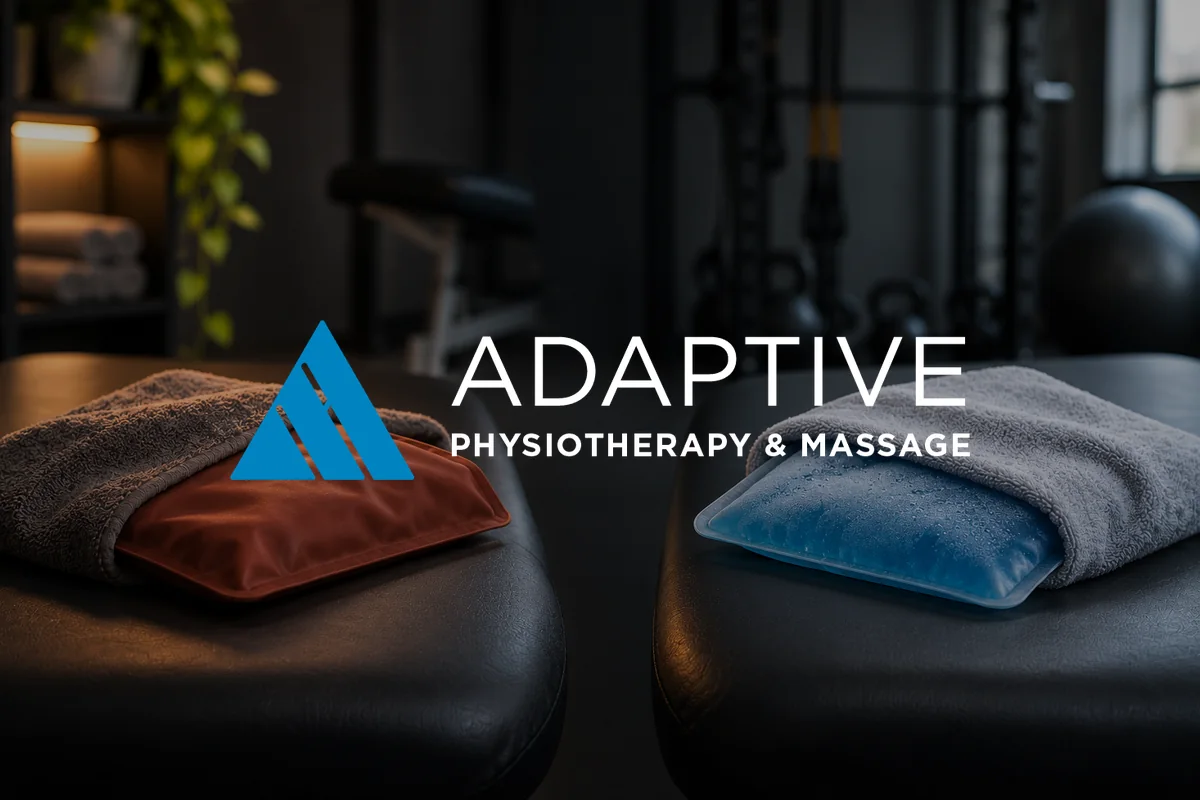
Maybe you've strained a muscle, twisted an ankle or woken up with a stiff neck. You reach for something to help, but then comes the question: is it better to apply heat or cold?
Both can help manage symptoms, but neither is a universal answer. The best choice depends on what you're experiencing, how the area responds and whether there are any reasons to avoid temperature-based treatment.
At Adaptive Physiotherapy & Massage in Booragoon, we look beyond short-term relief to understand your movement, function and what you need to get back to doing.
Understanding pain before choosing heat or cold
Pain is more complicated than a simple signal of tissue damage. Its intensity can be influenced by the type of injury, sensitivity of the nervous system, sleep, stress and how the area is being loaded. Pain after a recent injury and pain that has continued for months may need different assessments and management, but the age of the pain does not automatically tell you which pack to use.
Heat and cold are sometimes called thermal modalities. They can change skin and superficial tissue temperature and influence how discomfort is felt. Depending on the situation, a person may find either helpful—or neither.
Key point
A heat pack or ice pack is generally a comfort strategy, not the main treatment for an injury. Where appropriate, continuing suitable movement and progressively rebuilding capacity are more important to longer-term function.
Heat therapy: when warmth may help
Heat can increase local superficial blood flow and may help some people feel less stiff or guarded. A comfortable warm pack may make movement easier, especially when muscular tightness or stiffness is more troublesome than swelling.
Common ways to apply heat
- Reusable heat or wheat packs
- Warm showers or baths
- Clinician-supervised warm-water exercise or hydrotherapy
- Other professionally administered heat modalities, including paraffin wax for selected hand conditions
Possible short-term benefits
- Temporary pain relief
- Greater sense of muscle relaxation
- Improved comfort when moving a stiff joint
- Preparing to begin gentle movement or exercise
Heat may be helpful for some episodes of lower back pain, neck tension or general muscular stiffness. It does not need to be hot enough to feel uncomfortable, and stronger heat does not mean better results.
When to avoid or seek advice before using heat
Heat may not be suitable over a new injury with marked swelling, active bleeding, suspected infection, impaired circulation or reduced sensation. Take extra care if you have a condition that affects your ability to notice excessive temperature. Never apply strong heat to an area that feels numb.
Cold therapy: when cooling may help
Cold therapy, also called cryotherapy, can temporarily reduce pain by cooling the area and changing nerve activity. Ice packs may feel helpful after an injury, especially when the area is sore and swollen. However, evidence that ice improves the underlying speed or quality of tissue healing is limited.
Common forms of cold therapy
- Cold or gel packs wrapped in a towel
- A cool compress
- Clinician-guided cold-water immersion in appropriate settings
- Other cooling methods used with specific clinical precautions
What it may help with
- Short-term symptom relief after a strain or sprain
- Making an uncomfortable swollen area feel calmer
- Temporary relief of pain after some activities
- Comfort during the early stages of selected injuries
When cold therapy may be unsuitable
Cold can be unsafe for people with conditions such as Raynaud's phenomenon, cold hypersensitivity, certain circulation disorders or impaired sensation. Avoid applying it to fragile or compromised skin without clinical advice. Persistent numbness, severe pain, unusual skin colour change or blistering are reasons to stop and seek medical advice.
Heat or cold: which should you choose?
The following is a practical guide, not a strict rule that all injuries must follow.
| Situation | What may be worth considering |
|---|---|
| Recent ankle sprain with swelling | A wrapped cool pack may help pain temporarily; assessment, suitable loading and rehabilitation still matter. |
| Stiff neck or aching muscles | Gentle warmth may make movement more comfortable. |
| Lower back pain without concerning symptoms | Heat may provide short-term relief alongside maintaining suitable activity. |
| After a demanding training session | Choose based on comfort and recovery goals; neither is essential for everyone. |
| Persistent pain with no clear diagnosis | Seek assessment rather than relying on repeated heat or ice applications. |
Contrast therapy is sometimes used in rehabilitation, but evidence for meaningful added benefits is mixed. Alternating temperatures is not a necessary progression after an injury and should not replace a broader treatment plan.
How to use a heat or cold pack safely at home
Use a protective layer
Place a towel or appropriate cover between a pack and your skin. Do not apply ice directly or put an excessively hot pack on the skin.
Keep applications short and comfortable
For many adults, a brief application of approximately 10–15 minutes is a reasonable starting point, subject to the pack's instructions and individual circumstances. Shorter times may be required over bony areas or where tissues are thin. Do not sleep on a heat or cold pack.
Check your skin and response
Check regularly. Stop if you notice burning, unusual colour changes, excessive numbness, marked discomfort or any adverse skin reaction.
Don't use a pack to push through warning signs
If pain is severe, swelling is increasing, you're unable to bear weight, or new weakness or loss of sensation develops, seek appropriate medical assessment.
How heat and cold fit into physiotherapy
Thermal treatments are one possible tool within an individualised plan. They may help someone feel comfortable enough to begin moving, but a meaningful rehabilitation program considers the underlying problem, current capacity and personal goals.
Assessment first
We review symptoms, relevant medical history, movement, strength and functional limitations before recommending care.
Movement and exercise
Appropriate mobility work, gradual strengthening and activity modification can help build tolerance and confidence over time.
Hands-on care when useful
Remedial massage or other manual treatment may be appropriate for muscular discomfort, whether or not heat or cold is used.
Reassess and progress
We adapt the plan to how the person responds and what their work, everyday life or sporting activity requires.
For example, a person with a stiff lower back might enjoy a warm pack before gentle walking or exercise. Someone recovering from a knee sprain might choose a cool pack briefly for comfort, then continue suitable rehabilitation based on clinical guidance. The pack is a support—not the whole plan.
Common questions about heat and cold treatment
Is ice always best for the first 48 hours?
No. Cooling can help some people with symptoms after a recent injury, but the idea that every injury must be iced for a fixed period is too simplistic. The nature of the injury, swelling, comfort and medical advice all matter.
Can heat make inflammation worse?
Heat may increase discomfort or swelling in some recently injured or actively inflamed areas. If the area becomes more painful, hot or swollen after use, stop and seek advice if needed.
Will heat or ice speed up recovery?
Both may change pain temporarily, but neither reliably replaces assessment, progressive movement, strength or other appropriate treatment. Claims about faster tissue healing should be treated cautiously.
Can massage be combined with heat therapy?
Sometimes, if appropriate for the person and their symptoms. Massage is a legitimate treatment option for certain muscular complaints, not simply an add-on to physiotherapy or an obligatory part of a recovery plan.
Related reading and services
- Physiotherapy in Booragoon — individual assessment, advice and rehabilitation
- Remedial Massage in Booragoon — hands-on care for muscular discomfort
- Sports Physiotherapy — activity and injury-related rehabilitation
- Sports Rehabilitation Program — progressive strength and functional recovery where appropriate
Not sure what's causing your pain?
If pain, stiffness or an injury is affecting the things you want to do, a physiotherapy assessment can help you understand your options and what to work on next. We'll start with you and your goals, not simply a treatment technique.
27 Shields Crescent, Booragoon WA 6154 · Free onsite parking
References
- South Eastern Sydney Local Health District (2024). Application of Heat or Cold Therapy, SESLHDGL/073. Clinical safety guideline.
- Australian Commission on Safety and Quality in Health Care. Low Back Pain Clinical Care Standard. Clinical care standard.
- Malanga GA, Yan N, Stark J (2015). Mechanisms and efficacy of heat and cold therapies for musculoskeletal injury. Postgraduate Medicine. PubMed abstract.
- Houghton PE et al. (2010). Electrophysical agents: contraindications and precautions—an evidence-based approach to clinical decision making in physical therapy. Open-access review.
This article is general information and is not a substitute for assessment when an injury or symptom is concerning.