
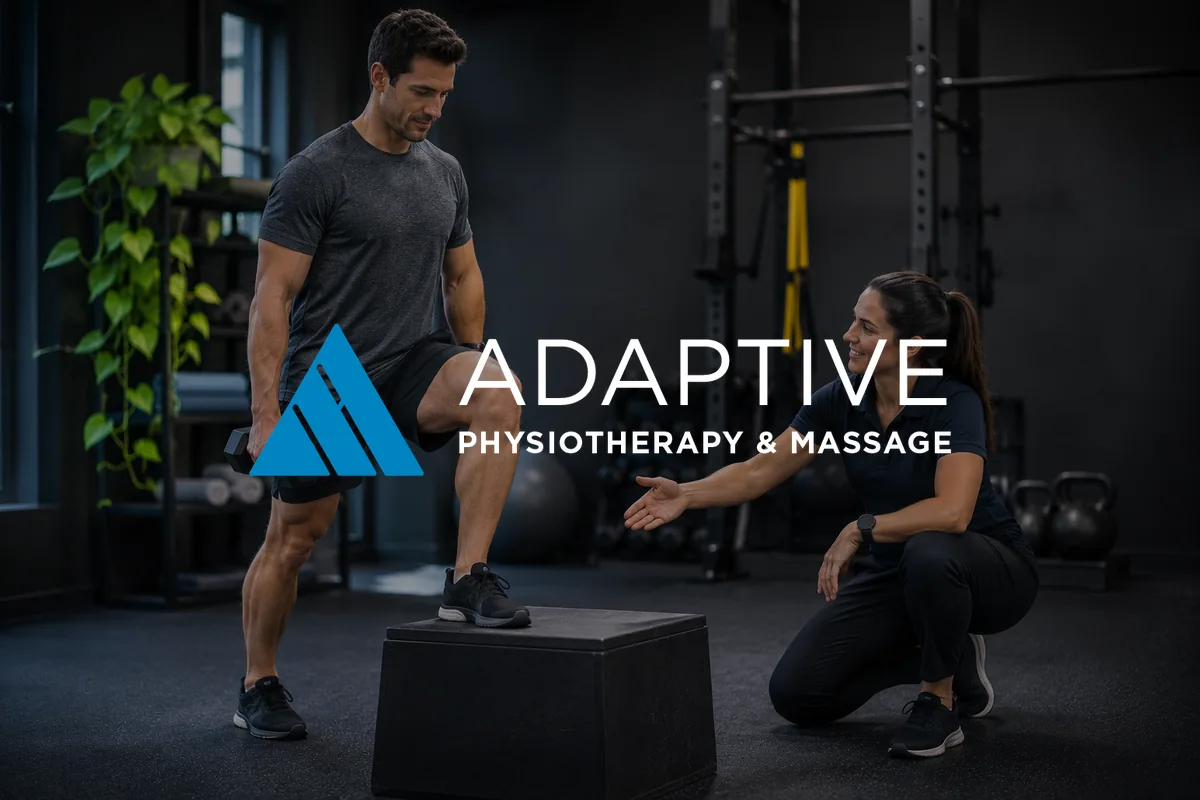
Rehabilitation is about getting back to the things you need and want to do—not just completing a list of exercises.
After an injury, surgery or a period of persistent pain, it can be difficult to know what to do first. Should you rest? Start moving? Build strength? And how do you know when you're ready for more?
Good rehabilitation starts with understanding where you are now, what matters to you and what your body needs to manage next. From there, physiotherapy combines assessment, practical advice, treatment and progressively challenging exercise to help you work towards your goals.
At Adaptive Physiotherapy & Massage in Booragoon, that's how we approach rehabilitation: individualise the plan, measure progress and adapt it as you change.
What does rehabilitation mean in physiotherapy?
Rehabilitation is a process of restoring or improving function after injury, surgery, illness or a change in physical capacity. Sometimes the immediate goal is to walk comfortably or return to work. Other times it's to lift weights again, manage persistent pain, play sport or build the confidence to stay active.
It isn't always a straight line from pain to recovery. A useful plan considers your symptoms, strength, movement, physical demands, confidence and the practical circumstances of your life. It can involve education, hands-on treatment when appropriate, exercise and changes to how you manage activity.
At Adaptive, we start with the person—not a treatment technique. We ask: Where are you now? Where do you want to get to? What will help you move better, build capacity and recover and adapt along the way?
Three important objectives of rehabilitation
The original Adaptive article highlights three connected objectives. These remain a useful way to explain why rehabilitation involves more than treating the painful area.
1. Maintain capacity elsewhere
Where suitable, keep the rest of the body active and strong while the affected area recovers. Complete inactivity isn't always necessary and may reduce fitness or strength.
2. Rebuild the affected area
Regain movement, strength, tolerance and function progressively, in line with the condition, healing requirements and individual response.
3. Return to meaningful function
Work towards what your body actually needs to do—daily tasks, work, sport, training or independent movement—and build the capacity for those demands.
These objectives often overlap. For example, someone recovering from knee surgery might continue appropriate upper-body training while rebuilding knee strength and walking capacity. Another person with persistent back pain might focus first on confidence with everyday movement, then gradually return to lifting or sport.
What does a physiotherapy rehabilitation program involve?
There isn't one program that suits every patient. Your physiotherapist chooses the approach based on assessment findings, current evidence, your goals and what is safe and realistic for your circumstances.
Assess your current position
We discuss your condition, symptoms, medical history, activity demands and goals. Assessment may include range of movement, strength, balance, walking, lifting or sport-related tasks. Following surgery, we also consider your surgeon's guidance and any restrictions.
Individualise the plan
The next step may involve managing symptoms, building confidence with movement, reducing an aggravating load or introducing specific exercises. We discuss what to prioritise now, what can continue and what needs to change temporarily.
Guide treatment and movement
Depending on the presentation, treatment may include education, activity advice, exercise rehabilitation, mobility work and selected hands-on techniques. Manual therapy may help with comfort or movement for some people, but isn't a substitute for building capacity where that is needed.
Progress strength and function
As you become more capable, exercise progresses towards the demands of your goals. That might include resistance training, balance tasks, walking endurance, lifting, jumping, running or return-to-work activities. The aim is not merely to do harder exercises; it's to develop the ability to handle what matters to you.
Reassess and adapt
We review meaningful measures such as strength, movement, symptom response and performance of everyday or sporting tasks. If progress is slower than expected, the plan may need to change or further assessment may be appropriate. Rehabilitation is adjusted as the person changes.
Collaborate when it helps
Depending on your needs, physiotherapy may involve communication with a GP, surgeon, other healthcare practitioner or suitable strength and conditioning professional. Collaboration should improve your care—not mean that everyone needs several services.
Examples of rehabilitation exercises
Exercise is selected for the specific injury, current capacity and task you want to return to. Some common components include:
Movement and mobility
Comfortable joint movement, controlled rotations, range-of-motion exercises and graded practice of movements that have become difficult.
Strength and load tolerance
Progressive squats, hinges, calf raises, rows, presses or other resistance exercises, depending on the condition and any medical restrictions.
Balance and coordination
Supported balance work, step-ups, single-leg tasks and progressively more demanding movement challenges when appropriate.
Someone returning to sport may also need running, jumping, landing, agility or sport-specific drills. Someone returning to physical work might practise lifting, carrying or sustained positions. These are examples—not a universal exercise prescription.
How does science inform rehabilitation?
Evidence-based physiotherapy uses the best available research alongside clinical expertise and the individual's circumstances and preferences. Research helps inform what approaches are likely to be useful, but it doesn't replace assessment or guarantee a particular outcome.
For example, a rehabilitation program may be guided by current advice about exercise progression and condition-specific precautions, while the actual exercise selection and pace reflect the person's symptoms, strength, response and goals.
Rehabilitation is also goal-directed: rather than only asking whether pain has changed, we look at whether you can do more of what matters—walk further, manage stairs, return to work, train consistently or participate in sport. Shared goal setting and ongoing review are important principles in person-centred rehabilitation. Learn about person-centred rehabilitation principles.
Why education and self-management matter
A physiotherapist's role isn't simply to deliver treatment during appointments. A useful rehabilitation plan helps you understand your condition, what changes to expect, how to adjust activity and how to progress between sessions.
This might mean knowing when to reduce a load temporarily, how to respond to an increase in symptoms, how to practise exercises safely or when to seek further advice. We aim to build confidence and independence, rather than unnecessary dependence on ongoing treatment.
Progress isn't always linear. A temporary increase in symptoms doesn't automatically mean damage, but new or rapidly worsening symptoms, significant weakness, unexplained swelling or other concerning changes should be assessed appropriately. Following surgery or a serious injury, your treating team's specific precautions take priority over general advice.
Rehabilitation at Adaptive: movement, strength and recovery
Our wider Adaptive philosophy is built around Movement. Strength. Recovery. Those principles apply across our clinic and strength-training services; they aren't three separate departments or stages everyone must complete in the same order.
For some people, restoring comfortable movement is the immediate priority. Others need a more substantial strength programme or help adjusting activity and recovery demands. Most rehabilitation programmes involve a changing balance of all three as the person progresses.
If you're returning to sport or higher-demand training, our Sports Rehabilitation Program may provide a suitable next stage. Our sports physiotherapy service also supports assessment and rehabilitation for sport-related injuries. Neither is automatically necessary for every patient.
Remedial massage remains a separate option for people seeking suitable hands-on care for muscular discomfort. It can complement broader rehabilitation when useful, but massage appointments don't need to be part of a physiotherapy plan.
Who can benefit from physiotherapy rehabilitation?
Rehabilitation can be relevant for people recovering from musculoskeletal injuries, operations, persistent pain or periods of reduced activity. The aims and professional input differ according to the condition and setting.
- After surgery: Follow procedure-specific precautions while progressively rebuilding movement and physical capacity.
- After sporting injury: Regain strength, confidence and sport-specific tolerance before returning to higher demands.
- For persistent musculoskeletal pain: Develop strategies that help with everyday activity, physical confidence and suitable exercise.
- For work-related injury: Build towards the movements, loads and tasks required for work, in collaboration with relevant stakeholders when appropriate.
- After reduced activity: Gradually restore walking, balance, general strength and endurance according to the person's health and needs.
Some problems need assessment by a GP, medical specialist or another allied health professional before or alongside physiotherapy. The appropriate level of care follows from the person and their condition.
How do we know rehabilitation is working?
Progress can mean less pain, but it can also mean better movement, more strength, greater activity tolerance, improved confidence or being able to do a valued task again. We review the measures that are useful for the person rather than applying a single score to everyone.
Reassessment may lead to increasing an exercise challenge, adjusting load, changing a goal, continuing the current approach or referring for further input. Good rehabilitation should evolve, not remain the same set of exercises indefinitely.
Related reading and services
- Physiotherapy in Booragoon — assessment, treatment and individualised rehabilitation.
- Sports Physiotherapy — injury rehabilitation and return to sport.
- Sports Rehabilitation Program — structured progression towards more demanding activity.
- Workers Compensation Physiotherapy — support for work-related injury and function.
- Remedial Massage — hands-on care for suitable muscular concerns.
Book a Physiotherapy Assessment in Booragoon
Recovering from an injury, surgery or ongoing pain? We'll start by understanding what you can do now, what you want to return to and what a useful rehabilitation plan might involve.
Adaptive Physiotherapy & Massage
27 Shields Crescent, Booragoon WA 6154 · Free onsite parking
References
- World Health Organization. Rehabilitation 2030. Rehabilitation initiative.
- NSW Agency for Clinical Innovation. Person-centred, goal-directed care. Rehabilitation model of care.
- NSW Agency for Clinical Innovation. Introduction to goal-directed rehabilitation. Rehabilitation planning guidance.
- Kang E, et al. Person-Centered Goal Setting: A Systematic Review of Intervention Components and Level of Active Engagement in Rehabilitation Goal-Setting Interventions. Archives of Physical Medicine and Rehabilitation. 2022. PubMed.